Vue lecture

Il y a de nouveaux articles disponibles, cliquez pour rafraîchir la page.

The biggest use cases for AI in Automotive (that aren’t just self-driving cars)

A study of 4 major use cases of AI in cars

In this fast-paced age of technological evolution, Artificial Intelligence (AI) emerges as the key catalyst driving profound shifts in the automotive sector. From smart vehicle design to customised in-car interactions, AI is reshaping every aspect of transportation, ensuring safer, more effective, and environmentally friendly journeys for both drivers and passengers.

In this blog, we’ll have a look at the four most promising use cases for AI in the automotive industry.

Intelligent vehicle lifecycle management

Innovative vehicle design, material use, and manufacturing processes

AI-powered generative design algorithms are transforming how vehicles are conceptualised and engineered, pushing the boundaries of creativity and efficiency. These algorithms optimise vehicle structures for performance, safety, and sustainability by analysing vast datasets and exploring numerous design iterations. 

Moreover, AI is revolutionising material selection: manufacturers are harnessing its capabilities to identify the most suitable materials for each component, balancing strength, weight, and environmental impact. This results in vehicles that are lighter, more fuel efficient, more technologically advanced, and more sustainable to produce — contributing to a greener industry and future.

Predictive maintenance and diagnostics

AI is reshaping the landscape of vehicle maintenance through predictive maintenance systems that redefine how issues are identified and addressed.

Some cars have over 100 embedded sensors, tracking everything from engine fuel-oxygen mixes and tyre pressure, to component temperatures and orientation. AI algorithms can use the data from these sensors to predict mechanical and electrical faults before they happen, opening up the door for proactive, preventative maintenance.

As a result, vehicle downtime is minimised, maintenance costs are reduced, and overall reliability is significantly enhanced, ensuring a smoother and more seamless ownership experience for drivers.

Supply chain enhancements

AI isn’t just making cars lighter and more efficient – it’s also making them easier to build and send to showrooms and car lots. Car manufacturers can use AI algorithms to analyse large amounts of data related to demand forecasting, inventory management, and logistics operations; this data will reveal ways to streamline supply chain processes and improve overall manufacturing efficiency. 

AI-driven supply chain enhancements enable OEMs (Original Equipment Manufacturers) to anticipate demand fluctuations, optimise inventory levels, and minimise lead times, thereby reducing costs and improving responsiveness to market dynamics. Moreover, AI enables predictive analytics for proactive risk management, allowing manufacturers to identify potential disruptions and mitigate them before they impact production. This helps car companies be more flexible, resilient, and competitive in today’s changing market. 

One example of this in action is the dispatch of parts across a vast network of locations, including repair shops and warehouses. AI algorithms analyse a multitude of factors, including weather data, customer repair habits, seasonal trends, and inventory levels, to predict demand and optimise part shipments. By consolidating information from various sources and through predictive analytics, AI enables automotive companies to proactively manage their supply chains, ensuring timely delivery of parts while minimising costs and maximising efficiency. 

This approach mirrors strategies employed by agricultural companies, which rely on AI to optimise the distribution of repair parts for harvesting machines, enhancing overall supply chain resilience and performance.

Enhanced in-car experience and connectivity

In the automotive field, it’s not just the vehicle that’s being improved by AI, but the human experience of that vehicle. AI is revolutionising the in-car experience, offering a seamless blend of comfort, convenience, and connectivity for drivers and passengers alike.

In-car experience personalisation

Gone are the days of one-size-fits-all vehicle settings. With AI, the in-car experience becomes highly personalised, adapting to the individual preferences and needs of each occupant. By analysing data on driver behaviour, environmental conditions, and historical usage patterns, AI algorithms adjust various settings within the vehicle to create a unique driver-specific experience. 

Imagine sitting in a brand-new car, or in your uncle’s car. Within seconds, the steering wheel height, mirrors, seat, and headrest adjust to put you at the perfect driving height with optimal vision of everything around you. The air conditioning turns on at a perfect 19 degrees (which your uncle thinks is a waste of fuel). The car radio imports your favourite stations as preset channels. The in-car GPS suggests preferred routes home for you based on your previous journeys and the current traffic. That’s the power of AI-driven user experience. 

AI ensures that every journey is as comfortable and enjoyable as possible. This level of personalisation not only enhances the overall driving experience but also fosters greater driver satisfaction and loyalty to automotive brands.

Natural Language Processing for smarter assistants

In today’s world, you’re more connected than ever. There’s just one problem: it’s illegal in most countries to use the thing that connects you (namely, your phone) while driving. This simple fact makes AI-powered natural language assistants a must-have companion. These assistants enable hands-free interaction with vehicle systems, allowing drivers to perform a wide range of tasks using voice commands alone. 

Whether it’s making phone calls, sending text messages, adjusting navigation settings, or controlling entertainment options, AI-powered natural language assistants make driving safer and more convenient. These assistants seamlessly integrate with other services and devices, such as calendars, emails, and smartphones, ensuring a connected and flawless experience for drivers. Imagine this: your AI companion remembers the 3pm text you got from your partner to pick up milk, and automatically adds a stop at the nearest convenience store that is listed as open and sells your usual purchased brand of organic 3.5% full-fat, free-range fresh milk. By harnessing the power of AI, natural language assistants transform the car into a true extension of the driver’s digital life, enhancing productivity and connectivity on the go.

Advanced mobility solutions and urban planning

AI goes even further than the car and its driver; at a macro scale, its data and feedback can improve roads, cities, and even the environment itself. As urbanisation continues to accelerate and cities confront growing challenges related to congestion, pollution, and limited infrastructure, AI emerges as a key enabler of advanced mobility solutions and urban planning strategies.

Multimodal AI Assistant and Cross-App Integration

The integration of AI-powered multimodal assistants marks a significant advancement in mobility solutions. These assistants are designed to seamlessly facilitate transitions between different modes of transport, offering users a harmonious and intuitive experience. Capable of processing various inputs such as voice commands, images, and video feeds, these assistants serve as versatile interfaces, connecting users with their vehicles and surrounding environments.

By analysing vast amounts of data, including traffic patterns, congestion hotspots, and user preferences, these assistants not only assist drivers but also contribute to the collective improvement of transportation systems. For instance, their recommendations for nearby points of interest (POIs) like attractions and services aren’t just about enhancing individual journeys. They are also about facilitating better traffic distribution, reducing congestion, and ultimately creating a more harmonious and enjoyable travel experience for everyone on the road.

Urban transport optimisation

In densely populated urban areas, efficient transport systems are essential for maintaining mobility and reducing environmental impact. AI plays a central role in optimising urban transport planning and infrastructure, using data analytics and predictive modelling to improve efficiency and sustainability. 

By analysing massive datasets, including traffic patterns, public transit schedules, and environmental conditions, AI algorithms identify opportunities for optimisation, such as route adjustments, traffic signal synchronisation, and modal shift incentives. Additionally, AI facilitates dynamic pricing and demand-responsive services, ensuring that transport networks remain responsive to changing needs and preferences. Through urban transport optimisation, AI enables cities to alleviate congestion, reduce emissions, and enhance overall mobility, creating more pleasant and sustainable urban environments.

Travel booking and mobility services

AI-driven travel booking, ride-hailing platforms and Mobility as a Service (MaaS) solutions offer individually curated and integrated transportation options, adjusting to individual preferences and needs. With the help of AI algorithms, these platforms analyse user data, historical travel patterns, and real-time availability to offer customised travel itineraries, including public transit, ride-sharing, and micromobility options. These plans extend beyond mode selection to include nuanced considerations such as off-peak travel calculations, surge pricing predictions, and custom suggestions for optimal travel experiences. For instance, AI could recommend travel options based on a user’s preference for a car with ample luggage space, in-car entertainment features, or the most direct route with the fewest stops.

Additionally, AI optimises travel routes and schedules, taking into account factors such as traffic conditions, weather forecasts, and user preferences, to ensure efficient and stress-free journeys.

By streamlining travel booking and offering tailored mobility solutions, AI enhances the overall urban mobility experience, making it easier and more convenient to navigate cities and reach destinations.

Simulation and testing for autonomous driving

The pursuit of autonomous driving (AD) stands at the forefront of automotive technology, promising safer, more efficient, and more convenient transportation solutions. Central to this endeavour is the use of AI to assist in rigorous simulation and testing processes, ensuring the reliability and safety of autonomous vehicles.

Complex AD simulation scenarios

The development and validation of Advanced Driver Assistance Systems (ADAS) and autonomous driving technologies require extensive testing under diverse and complex scenarios.

AI-driven simulation platforms play a crucial role in this process, generating realistic and dynamic environments that mimic real-world driving conditions. These simulations encompass a wide range of scenarios, including varying weather conditions, road layouts, traffic patterns, and unforeseen events, allowing developers to evaluate the performance of autonomous systems in virtually any situation. 

By relying on AI algorithms, these simulations continuously evolve and adapt, incorporating new data and insights to enhance their realism and effectiveness. As a result, developers can iteratively refine and optimise autonomous driving algorithms, accelerating the journey towards safe and reliable autonomous vehicles.

AI and AD Integration

At the core of AD systems lies the integration of AI algorithms, enabling vehicles to perceive, interpret, and respond to their surroundings in real-time. AI processes data from various sensors– including cameras, LiDAR (Light Detection and Ranging), and radar– to identify objects, detect obstacles, and predict their movements. 

Through advanced machine learning processes, AI algorithms continuously learn and improve, enhancing the accuracy and reliability of autonomous driving capabilities. Additionally, AI facilitates decision-making in complex and dynamic environments, enabling vehicles to navigate safely and efficiently in any driving conditions, no matter how stormy or congested they are. 

By integrating AI into autonomous driving systems, automotive manufacturers are creating even safer self-driving cars that can share the road with the rest of us.

AI for impactful and smarter automotive innovations

In conclusion, the integration of AI into the automotive industry has ushered in a new era of innovation, transforming every facet of the driving experience. From revolutionising vehicle design and maintenance to optimising supply chains and enhancing urban mobility, AI is driving (pun intended) unprecedented advancements that promise safer, more efficient, and more sustainable transportation solutions.

The applications of AI discussed in this blog illustrate the breadth and depth of its impact on the automotive sector. AI-driven design and manufacturing processes are pushing the boundaries of creativity and efficiency, while predictive maintenance systems are ensuring the reliability and longevity of vehicles on the road. In-car experience personalisation and natural language assistants are redefining how drivers interact with their vehicles, while advanced mobility solutions and urban planning strategies are reshaping the way we navigate and interact with cities. Furthermore, AI’s role in optimising supply chains and facilitating autonomous driving technologies underscores its potential to revolutionise the entire automotive ecosystem. By harnessing the power of AI, automotive companies can unlock new opportunities for efficiency, sustainability, and innovation, driving us towards a future where mobility is smarter, safer, and more accessible for all.

As we look ahead, it is clear that AI will continue to play a leading role in shaping the future of transportation.

Canonical joins ELISA

Advancing safety-critical Linux

Canonical is proud to announce it is joining the ELISA (Enabling Linux in Safety Applications) project. By joining ELISA, Canonical will work side-by-side with other industry leaders to make Linux a trusted and dependable option for safety-critical environments.

ELISA for Linux in safety-critical systems

ELISA seeks the establishment of comprehensive guidelines and robust processes for members to work towards approaches for deploying Linux in safety-critical systems. ELISA continuously scrutinises the evolving landscape of technology in order to define foundational approaches and best-practice standards for implementing Linux securely, especially in situations where a system failure could lead to serious damage to property or the environment, or result in the loss of human lives. In short, ELISA helps Linux systems meet the certification standards for spaces where failure is not an option.

“As the demand for safety-critical integrated embedded systems increases, the Linux operating system’s role continues to grow.  The ELISA community allows forward-thinking organisations to collaborate on establishing best practices when working with Linux across industries and markets,” said Kate Stewart, Vice President of Dependable Embedded Systems at the Linux Foundation. “We are excited for Canonical to join our ecosystem and showcase the widening interest and impact in Linux safety-critical applications.”

By fostering collaboration among industry leaders, ELISA’s mission is to confront the growing demand for rigorous safety standards and to ensure that Linux can comply with them. Its strategic focus extends across pivotal sectors, including automotive, medical, industrial automation, and robotics. The widespread adoption across these and many other industries is exciting and holds immense promise, but it also demands a heightened commitment to safety imperatives, to ensure that open source tools can safely take on challenges where human lives and the environment are at stake.

“Through its concerted efforts, ELISA is seeking to bridge the gap between technological needs and safety considerations, thereby ensuring that Linux emerges as a trusted and reliable choice for critical systems”, says Pierre Guillemin, VP of Engineering Excellence at Canonical. “By taking advantage of the shared expertise of industry leaders, the consortium seeks to tackle the wide range of challenges inherent in the use of Linux in safety-critical industries. In doing so, ELISA paves the way for transformative advancements, announcing a future where Linux thrives in safety-critical environments with unparalleled reliability and resilience.”

Canonical, pioneering excellence in open source

Ubuntu is the industry pace-setter in open source trust, stability and security. But Canonical’s commitment to innovation and excellence does not end there. 

Canonical’s engineering team has adopted the use of independent quality indicators such as TIOBE TQI to benchmark and improve software quality. This is complemented by adherence to ISO standards for cybersecurity (ISO 21434) and functional safety (ISO 26262), and substantial contributions to automotive-grade systems.  

“As Canonical embarks on this collaborative journey with ELISA, we’re driven by a strong commitment to advancing functional safety on Linux. Our dedication to quality, security, and safety aligns seamlessly with ELISA’s mission, and we’re excited to contribute our expertise to this significant initiative”, says Bertrand Boisseau, Automotive Sector Lead at Canonical.

Reaching safety Linux, a collaborative journey

Canonical and other ELISA members are set on an ambitious path to define new benchmarks in the realm of safety standards for Linux. The pursuit of ISO 26262 compliance is central to their vision to ensure the utmost reliability and safety in critical industries. By aligning their efforts towards this goal, the consortium is aiming to enter a transformative era where safety-critical Linux can demonstrate that it can meet and even exceed stringent regulatory requirements.

To learn more about Canonical and our engagement in automotive: 

AI and automotive: navigating the roads of tomorrow

I had the pleasure to be invited by Canonical’s AI/ML Product Manager, Andreea Munteanu, to one of the recent episodes of the Canonical AI/ML podcast. As an enthusiast of automotive and technology with a background in software, I was very eager to share my insights into the influence of artificial intelligence (AI) in the automotive industry. I have a strong belief that the intersection of AI and cars represents a pivotal point where innovation meets practical implementation, and leads to safer, more efficient and more user-friendly cars. 

In the episode, several key issues in the use of AI in cars and automotive in general came up. It’s not just the use of AI that we should be thinking about, but a whole range of safety, ethics, and privacy concerns that can eclipse simple technical challenges. This underscores the importance of considering the broader societal impacts and ethical implications of integrating AI into automotive technologies.

This blog explores the key takeaways from the engaging conversation we’ve had, diving into the present and future implications of AI in the world of automobiles. We talked about a lot in the half-hour discussion, but a stand-out moment for me was when we spoke about the impact AI implementation has on costs. I’ll get more into why I thought this was the most important part of our discussion in a bit, but for now you can listen to the entire conversation yourself in the podcast episode.

AI is everywhere in automotive

AI is already embedded in every aspect of the automotive sector. This key role is not just limited to autonomous vehicles: AI is integral to manufacturing processes, predictive maintenance, and supply chain management. In almost every part of the automobiles – whether it’s conceptualising and building cars, driving them, or monitoring their performance throughout their lifecycle – AI is critical.

Safety considerations

Cars driving themselves around makes people very nervous, especially when algorithms are tasked with making intricate split-second decisions that boil down to “don’t swerve into oncoming traffic”. It’s no surprise that safety is the paramount factor in vehicle AI conversations. Therefore, it is imperative to address the safety concerns associated with the integration of AI in automotive technology.

“Would you protect the driver and the vehicle occupants versus all the surrounding pedestrians? In some cases, the vehicle will have to choose”*
Bertrand Boisseau

It’s a troubling ethical concern: do machines have a right to make decisions about human life, and what are the limits to that decision-making process? AI and autonomous vehicle engineers have their work cut out for them, as these decisions are incredibly complex and happen at the speed of life. When a glitch happens on your desktop, it’s not so bad because you’re not travelling at 100 km/hr through 2-lane traffic with oncoming trucks and pedestrians on every side.

While these challenges are significant and lead to a lot of uncertainty about whether it is safe to let Autonomous Driving (AD) vehicles drive around at the maximum speed limit, we should pause for a second to reflect on the extreme and ongoing testing and retesting that they undergo. 

Driverless cars often make headlines when accidents happen. But it’s important to remember that accidents are part of driving, whether it’s with a human or autonomous tech. In reality, driving carries risks, and you’re likely to get in a car accident in your lifetime. So, while one accident might spark concerns, it’s crucial to see it in the bigger picture of transportation safety. 

Also, a study comparing human ride-hail drivers and self-driving cars in San Francisco revealed that human drivers are more likely to crash, cause crashes, and injure others than autonomous vehicles. Human drivers had a crash rate of 50.5 crashes per million miles, while self-driving cars had a lower rate of 23 crashes per million miles.

Additionally, the development of robust fail-safe mechanisms and redundant systems can serve as safeguards against potential algorithmic errors or malfunctions. Furthermore, ongoing collaboration between industry stakeholders, regulatory bodies, and research institutions fosters the establishment of comprehensive safety standards and guidelines for the integration of AI in automotive technology. 

By prioritising safety considerations and adopting a multi-faceted approach encompassing technological innovation, rigorous testing, and regulatory oversight, the automotive industry can effectively address the safety challenges associated with AI integration, paving the way for safer and reliable autonomous driving systems.

Diverse applications beyond driving

While self-driving cars often take centre stage, AI solves a broader spectrum of problems for the automotive industry: optimising manufacturing processes; predictive maintenance for parts replacement; and enhancing supply chain management efficiency, to name a few. It will also transform the in-car experience with advanced voice recognition and personalised assistance.

“I do believe that having advanced personal assistant will be noticeable for the user. Once you start putting voice recognition in there, it can become, I think, very useful.”*
Bertrand Boisseau

Challenges and concerns

On the podcast, we mention that safety is the most obvious concern when it comes to the use of AI in cars, but there are even greater challenges and concerns that developer automotive industry figures should be thinking about. These include privacy issues, the role of regulation in the use of AI, public trust in AI systems, job displacement fears, and the substantial costs associated with running AI/ML models, both in terms of processing power and energy consumption. 

“You want to make sure that whatever is sent to the training models still complies with data privacy concerns: how do you collect data, how do you share vehicle data -which is usually private data-, how do you train these models?”*
Bertrand Boisseau

When it comes to training machine learning models for autonomous vehicles, maintaining data privacy is crucial. We need to be mindful of how we collect and share vehicle data, ensuring it aligns with privacy concerns. It’s vital to gather data ethically and responsibly, while also validating its quality to prevent biases and inaccuracies. After all, if we feed the models with flawed data (from bad drivers, for example), we risk compromising their performance and safety. So, robust data validation processes are essential to ensure the effectiveness and reliability of autonomous vehicle technology.

The evolution of jobs

As AI evolves, so too do the nature of jobs in the automotive industry. Take developers as an example: as AI gains a stronger foothold in automotive development, our roles will transform from manually coding algorithms to focusing on simulating and validating AI models. 

“I don’t agree with the idea of having job displacement in any way, but I do think that there is going to be a shift [in] the market, and there is a clear skill gap or understanding gap.”*
Andreea Munteanu

The industry faces a growing need for individuals with expertise in both AI and automotive engineering, bridging the gap between technology and traditional automotive skills.

However, it’s also crucial to acknowledge the widespread concerns about the potential impact of autonomous vehicles on various job sectors within transportation, including taxi drivers, delivery drivers, truck drivers, valets, and e-hailing service contractors. While autonomous technology is advancing rapidly, broad legislation still typically mandates the presence of a human driver to take over the wheel if necessary, meaning fully human-free cars aren’t imminent.

The use of open source

Open source software will play a key role in the automotive sector. Open source software presents indispensable advantages such as unparalleled transparency, enabling thorough inspection and auditability of the codebase. 

“Open source software in general and even [especially] in AI/ML would be the wiser choice in most cases.”*
Bertrand Boisseau

This transparency not only fosters trust and reliability but also empowers developers to identify and rectify potential issues swiftly, ensuring the highest standards of quality and security. Additionally, going with closed source might mean that Original Equipment Manufacturers (OEMs), or even the customers, have to pay extra fees per year just for licences. Imagine having a “smarter” car that becomes useless if a licence lapses or expires. Open source cuts down on these costs since you’re not constrained by licences, making software cheaper to create, keep up, and expand. Fewer closed source licences mean less complexity in the user experience.

The adoption of open-source models, tools, and frameworks is likely to grow, especially as companies aim to balance innovation and security.

Data privacy

As AI becomes increasingly integrated into the automotive industry, ensuring robust data privacy measures is paramount. The vast amounts of data generated by connected vehicles, ranging from driver behaviour to location information, raise significant privacy concerns. 

It’s essential to implement strict and clear data protection protocols to safeguard sensitive information from unauthorised access or misuse. Additionally, transparent data collection practices and clear consent mechanisms must be established to ensure that users have control over their data. 

Failure to address data privacy issues adequately not only risks violating privacy regulations but also erodes consumer trust, hindering widespread adoption of AI-driven automotive technologies. With the implementation of EU policies such as GDPR, fines can be as high as 10 million euros or up to 2% of the company’s entire global turnover of the preceding fiscal year (whichever is higher), further emphasising the importance of robust data privacy measures.

AI can reduce costs in automotive

Cost considerations are another crucial aspect of integrating AI into the automotive industry. While AI technologies hold immense potential to optimise operations, enhance safety, and improve the driving experience, they often come with significant upfront and ongoing costs. 

The automotive industry is also fiercely focused on cost optimisation: cars that are more expensive are a severe risk for sales, especially in saturated markets. What good is AI and all the hardware and infrastructure it will need if it just leads to cars that their usual buyers can no longer afford? 

Additionally, ensuring compatibility with existing systems and regulatory compliance may incur other expenses. Moreover, there are ongoing costs associated with maintaining and updating AI systems, as well as training personnel to effectively use and manage these technologies. 

However, despite the initial investment, the potential long-term benefits, such as increased efficiency, reduced accidents, and improved customer satisfaction, can outweigh the costs over time. Therefore, while cost is a critical factor to consider, automotive companies must carefully weigh the upfront investment against the potential long-term returns and strategic advantages offered by AI integration.

Regulations: the wild west won’t stay wild forever

Navigating regulatory frameworks generally presents significant challenges. This is already true for the integration of AI into the automotive industry. Regulators are often slow to react to the rapid pace of technological advancements, resulting in a lag between the emergence of new AI-driven automotive technologies and the establishment of appropriate regulations. This delay can create uncertainty and hinder innovation within the industry as companies navigate ambiguous regulatory landscapes. 

However, once regulatory wheels are set in motion, they can hit like a truck, with stringent requirements and compliance measures impacting the entire automotive ecosystem. The sudden imposition of regulations can disrupt ongoing projects, necessitate costly adjustments, and delay the deployment of AI technologies. 

Therefore, automotive companies must remain vigilant and proactive in engaging with regulators, advocating for clear and forward-thinking regulatory frameworks that balance innovation with safety and compliance. By fostering collaboration and dialogue between industry stakeholders and regulators, the automotive industry can navigate regulatory challenges more effectively and ensure the responsible and sustainable integration of AI technologies.

Reconciling AI and sustainability

Sustainability and energy consumption are crucial topics of debate in the automotive industry, especially concerning the integration of AI technologies. Data centres, which are essential for processing the vast amounts of data generated by AI-driven systems, consume substantial amounts of energy. The energy usage of a single data centre can be equivalent to that of a small town, highlighting the significant environmental impact associated with AI infrastructure.

“If you need processing power, you need energy. The big [AI/ML] players have also been saying that we will need to build nuclear power plants to run all the requests.”*
Bertrand Boisseau

Similarly, badly optimised, individual autonomous cars, with their sophisticated sensor systems and computational requirements, might also consume considerable energy during operation.

As the automotive industry embraces AI, it must address the sustainability implications of increased energy consumption and explore strategies to minimise environmental impact, such as optimising algorithms for efficiency, utilising renewable energy sources, and implementing energy-saving technologies.

Addressing criticisms of automotive automation

Automation in the automotive industry presents significant potential, yet it’s essential to address ongoing discussions surrounding the broader concept of automation, particularly in social media and consumer circles. Questions arise, challenging the value of autonomous driving and whether every aspect of a car’s operation needs to be automated. While these debates hold merit, they often overlook the broader implications and benefits that automation can bring.

Arguments against automation often highlight concerns regarding the potential loss of manual driving skills and the ability to react to unforeseen situations beyond the scope of automated systems. However, it’s crucial to consider that historical transitions in automotive technology, such as the shift from manual to automatic transmission or the adoption of adaptive cruise control, have not resulted in increased accidents — quite the opposite, in fact. On top of that, the advancement of automation extends beyond driverless vehicles alone, encompassing a multitude of frameworks, optimisations, and breakthroughs with far-reaching impacts.

Drawing parallels to other technological achievements, such as the space program, sheds light on the extensive benefits that arise from ambitious projects despite initial scepticism. Much like criticisms were raised against space exploration, which questioned its necessity or deemed it a misallocation of resources, the collective efforts in the automotive industry toward automation yield a number of innovations and enhancements. These advancements not only streamline operation and maintenance but also significantly enhance safety for drivers and road users alike. Therefore, while discussions surrounding automation provoke diverse perspectives, embracing its potential fosters progress and innovation within the automotive landscape, and beyond.

The future of AI in automotive

In the future, AI in the automotive industry will certainly be widespread; but the application of AI will dominate more specific use cases, such as autonomous driving systems, personal assistants or predictive maintenance. The reasons for this are quite simple: the data processing and warehousing for each automated vehicle become difficult to design and expensive to run, especially when the financial returns on AI products and their long-term financial sustainability are still unproven. There are still strong challenges when it comes to generating revenue from AI investments, particularly in the automotive realm, where return on investment and sustainable business models are still evolving.

I found our podcast conversation on AI in the automotive industry incredibly engaging, especially when we delved into the potential impact on safety and driving experiences. It’s fascinating to envision how AI will revolutionise not just the way we drive, but also how vehicles are manufactured and maintained. As AI paves the roads of tomorrow, the integration of AI into the automotive industry promises a transformative journey.

As a passionate car enthusiast, I think we’re headed towards a new era of innovation. AI will be in our cars, homes, jobs, buses, and perhaps even our law-making offices. As it grows and evolves, it’ll be even more important to keep track of its progression and adoption – which is why I’m glad that podcasts like ours exist. If you want to stay ahead of AI/ML and GenAI in the automotive industry – or indeed, any industry – and watch its interplay with open source applications, follow the Ubuntu AI Podcasts by Canonical.

*quotations edited for clarity and brevity

Listen to the podcast episode

Contact Us

Further reading

Want to learn more about Software Defined Vehicles? Download our guide!

Learn about the next-generation automotive operating system: EB corbos Linux – built on Ubuntu

How to choose an OS for software development in automotive

Canonical’s commitment to quality management

As Canonical approaches its 20th anniversary, we have proven our proficiency in managing a resilient software supply chain. But in the pursuit of excellence, we are always looking to set new standards in software development and embrace cutting-edge quality management practices. This enables us to meet current technological landscape needs. It also paves the way for future innovation, motivating us (as ever) to make open source a key driving force across all industries. In this article I will explore how combining the openness and transparency inherent in open source principles with the right quality management frameworks enables us to lay new foundations for the software-defined industries of tomorrow. 

Open source adoption is growing and with it, regulation

The presence of open source software components in regulated industries has accelerated dramatically in the past couple of years and can be found everywhere, from the smallest industrial component to the largest ship in the world. Such a broad application domain brings additional complexity and heightened expectations that we address the evolving need for quality requirements. While language-specific standards were ways to address guidelines in a relatively simple world, this is not enough anymore. Instead, we need to adopt quality models that are not just a compliance requirement, but effectively a way to evaluate the produced engineering components. 

While these types of models are often developed in the context of regulated domains in specific industries, they can provide insights that are impactful across a broad range of applications. For instance, ISO 25010, a quality model that is the cornerstone of a product quality evaluation system, is a great framework to help engineers understand the strengths and weaknesses of specific artefacts using static code analysis. By using an objective, reproducible and independent quality model that follows ISO 25010 standard, Canonical can meet the expectations of a broad spectrum of industries and enable the opportunities that open source software brings. 

Adding independent quality indicators

TIOBE is supporting Canonical in getting an independent overview of its code quality by checking the reliability, security and maintainability of its software sources. The measurements are based on ISO 25010 and follow a strict procedure defined by TIOBE’s Quality Indicator (TQI). TIOBE provides real-time data integrated in programming environments and separate dashboards and makes use of best-in-class third party code checkers for Canonical.

Paul Jansen, CEO of TIOBE states: “We are thrilled to contribute to the success of Canonical. After having checked the code quality of a lot of Canonical’s projects in our independent and regulated way, it is clear that Canonical is scoring far above the average of the 8,000+ commercial projects we measure every day”.

At Canonical, we believe that Quality Management (QM) is an essential pillar in the development of open source software. That is why we added TQI as one additional control point across our software development lifecycle process. In most industries, the expectations towards innovation but also quality attributes, including the ones highlighted by TIOBE Quality Indicator, are very high. The integration of open source software with industry-recognised quality models marks a paramount step towards achieving excellence and leading to the production of superior software solutions.

Addressing quality management requirements in automotive

A prime example of the advantages of independent quality indicators can be seen in the automotive industry. This sector, with its high demands for safety and technological innovation, presents unique challenges that require impeccable quality and robust software solutions. As vehicles become increasingly software-defined, integrating open source software with industry-recognised quality models becomes not just beneficial but essential. Quality management works as a driving force – not just ensuring the reliability and safety of vehicles – but also the key building block for generating trust in open source within the automotive industry. 

As Canonical’s Automotive Sector Lead, Bertrand Boisseau, explains: “The results of the collaboration with TIOBE are crucial, especially in the realm of Software Defined Vehicles (SDVs), where the abstraction and decoupling of software and hardware development cycles is key. The TIOBE TiCS framework supports our R&D efforts related to automotive, enabling us to go beyond the expectations of this demanding ecosystem”. 

Conclusion

Our approach is designed to address the inherent complexity of modern software stacks, which are by nature heterogeneous. We make use of quality models like ISO 25010 as accelerators to enhance our quality management processes. At Canonical, these models are instrumental in enriching our continuous improvement practices with measurable data, while also aligning with the expectations of the broader enterprise landscape, particularly when combined with the openness and transparency open source software provides. 

If you have embarked on a similar journey to measure quality management in your organisation, I would love to hear about your experience. If you’re eager to join our mission in advancing precision engineering, please explore our openings starting with the Technical Manager Automotive and Industrial as well as our Lead Development Lifecycle Engineer positions. Stay tuned to follow our journey towards engineering excellence and connect with me on LinkedIn.

Simplifying software-defined vehicles (SDVs) with EB corbos Linux – built on Ubuntu

Carmakers are facing numerous challenges on the path towards software-defined vehicles (SDVs), such as legacy vendor dependence, which is leading to a lack of scalability, and high maintenance costs. Adopting a software-centric approach should reduce complexity and costs, accelerate time to market, improve product quality, increase flexibility, and provide more robust cybersecurity.

Carmakers need to fundamentally transform their processes and organisational structures, focusing on software development and services. Collaboration between different departments, as well as external entities, will be key in delivering exceptional products and experiences to customers. This is what highly competitive brands should be aiming for.

SDVs are the future of automotive E/E architecture. In this future, the car will be more akin to a mobile computing device. Instead of being constrained by hardware limitations, the SDV will benefit from software updates that modify their features, and enable greater adaptability and performance optimisation.

Unlocking the benefits of SDVs

As detailed in our CTO’s guide to software-defined vehicles, the SDV will reduce the complexity of vehicle architectures by simplifying the vehicular E/E hardware configurations within a vehicle. The objective is to replace multiple ECUs with fewer, more powerful components. This will lead to faster time to market, minimising engineering and development efforts that were previously required to customise, test and integrate each separate ECU. Improving quality is easier to achieve as company resources are focused on fewer items. Above all, it will lead to reduced costs.

However, just simplifying hardware is not enough to guarantee platform flexibility. The SDV is the strong layer interconnecting the different components. This software layer will act as the interface between the different components, software platforms, and networks. Ideally this should also enable OEMs to adapt to supply chain constraints, and component shortages, since the software will be adaptable to more hardware platforms.

The software-defined vehicles will make OEMs more competitive and will help them focus on creating value for the user experience, enhancing mobility services, monetising software or features, for example. In addition, the SDV helps to simplify the safety challenges. For instance, safety-proof points and reliability items can be applied on multiple types of ECUs, making fixes to potential new threats applicable to more devices.

With cybersecurity risks increasing, the next challenge facing the SDV concepts will be the demonstration that simplified software platforms reduce surface exposure while enabling additional levels of cybersecurity protection to vehicles.

A flexible and unique solution

As automotive is rapidly evolving, pushed by technologies like AD and EV, there is a need for a more flexible software platform. Elektrobit offers EB corbos Linux – built on Ubuntu, which provides a solution for secure and reliable connected vehicles, making it an ideal choice for Tier1s and OEMs that are looking to move towards Software-Defined Vehicles. With a lightweight footprint and long-term maintenance support of up to 15 years, it offers a flexible solution for automotive companies.

Elektrobit leverages the versatility of Ubuntu so that developers can use a wide range of tools, libraries and components to improve their design and testing processes. On top of that, users  benefit from the stability and reliability that Canonical has provided for 20 years with the LTS release cycles of Ubuntu, and has access to regular security patches.

EB corbos Linux – built on Ubuntu, brings the best of both worlds, combining Elektrobit’s deep expertise in automotive with the open-source skills of Ubuntu and Canonical.

With regular over-the-air (OTA) updates and security patches, EB corbos Linux – built on Ubuntu, ensures that your vehicles stay secure throughout their lifecycle. This powerful and scalable OS constitutes a turnkey solution for next gen connected vehicles, combining Elektrobit’s knowledge in automotive software with the scalability of Canonical’s Ubuntu. 

EB corbos Linux – built on Ubuntu also includes specific automotive features like an embedded event management and logging system, a configurable root file system initialization, as well as an SDK for development and build.

How cooperation will foster progress

EB corbos Linux – built on Ubuntu, represents a step forward towards SDV development. With Ubuntu at its core, it will greatly reduce time spent on development infrastructures, prototyping and deployment. Moreover, with proven security mechanisms and long-term support, this OS will benefit from CVE patches the same way your Ubuntu desktop does.

Elektrobit and Canonical are strongly working on this collaborative effort in order to push the industry towards SDVs with an OS that is designed specifically for current and future highly demanding automotive use cases. We are leveraging decades of experience across both software and automotive industries, to offer a combined, all-in-one solution tailored for automotive needs.

Ensure your company remains ahead in developing embedded automotive software. Try out our next generation solution and see for yourself.

Driving towards Environmental Parity and Software-Defined Vehicles with EB corbos Linux – built on Ubuntu

Authors:
Dr. Joachim Schlosser, Senior Manager, Elektrobit
Bertrand Boisseau, Automotive Sector Lead at Canonical

The intersection of SDVs and HPCs

As the automotive industry continues to advance into the world of high-performance computing (HPC), it becomes increasingly crucial to achieve environmental parity for seamless software integration. In this blog post, we will explore the synergy between Elektrobit and Canonical at the core of ‘EB corbos Linux – built on Ubuntu‘ in the context of automotive computing. This partnership not only takes advantage of cutting-edge technology but also emphasises a commitment to open-source principles. 

EB corbos Linux – built on Ubuntu, serves as a flexible and unique platform designed to meet the evolving needs of the automotive industry, particularly in the context of technologies like advanced driver assistance (ADAS) and electric vehicles (EV). This solution is aimed at providing a secure and reliable environment for connected vehicles, making it suitable for Tier 1s (suppliers) and OEMs (original equipment manufacturers) that are transitioning towards software-defined vehicles (SDVs). Let’s dig into the intricacies of HPC in automotive and explore how EB corbos Linux – built on Ubuntu, can play a vital role in reshaping the automotive software development landscape.

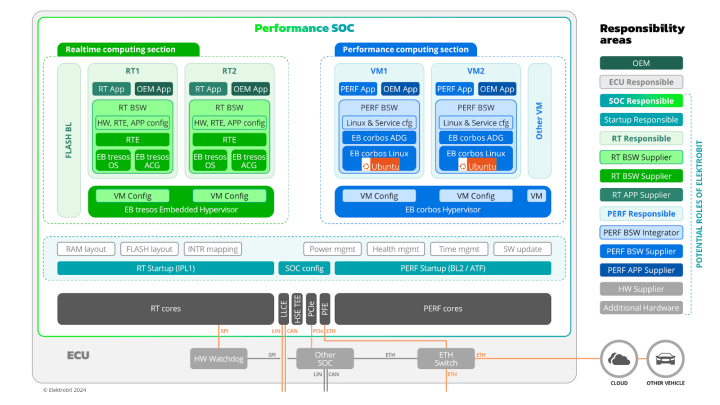
Navigating towards SDVs involves a profound connection between the vehicle electrical and electronic (E/E) architecture, HPC and, in general, the arrival of in-vehicle servers. When focusing on complex computing functions and containerised services, the next phase in E/E architecture will rely on centralised zonal controllers revolving around a central server, which would act as a key component often referred to as the “vehicle server” or the “vehicle HPC”. While its power will be notably less than that of cloud-based HPC, it will differ from a technical standpoint. This vehicle server will benefit from the abstraction layers defined by domain focused E/E architectures and will rely on cloud-native approaches.

Environmental parity in the SDV era

Recently, we’ve highlighted the significance of environmental parity in accelerating automotive software development. We emphasised the challenges posed by hardware-related issues in the software-driven innovation of the automotive sector. Environmental parity serves as a solution to replicate the properties of physical vehicle components in a cloud environment, ensuring software performance under real-world vehicle conditions. By encouraging a modular, cloud-native approach, environmental parity reduces hardware constraints and enables cross-platform software development within the context of software-defined vehicles.

Achieving environmental parity involves replicating real-world conditions, including real-time capabilities, sensor inputs, hardware capabilities, and communication protocols. Cloud-based development platforms can facilitate this process, allowing automotive Linux systems to meet the requirements of the runtime hardware environment in automotive applications and transfer the adherence to these requirements to the cloud environment.

“AWS offers value to its automotive customers through an extensive portfolio of purpose-built industry solutions, services, and partner offerings.  With Elektrobit and Canonical launching the Elektrobit corbos Linux (EBcL) based on Ubuntu with support for AWS Graviton via AWS Marketplace, AWS customers can access EBcL instantly and start developing automotive applications on ARM architecture-compatible Graviton EC2 instances,” said Stefano Marzani, worldwide tech leader for Software Defined Vehicle at AWS. “This offering is another testament to the power of collaborative software development in the cloud.    Integrating added value stacks from Elektrobit into Canonical’s offering enables automakers using AWS to accelerate their SDV roadmap and “shift-left” automotive development, validation and testing.  Automakers can start developing automotive applications on Amazon EC2 instances powered by Arm-based AWS Graviton2 processors, and EBcL”

Cloud execution with embedded architecture in mind

In the field of software development, the traditional approach of relying on physical prototypes presents several challenges. One of these challenges is the limited availability of Production and R&D electronic control units (ECUs), which often leads to delays in design and development processes.  Another challenge is the cost and complexity of deploying and collaborating on Hardware in Loop (HiL) systems across multiple time zones. In order to stay competitive, OEMs (Original Equipment Manufacturers) must embrace a cultural shift towards a faster, more focused, and agile engineering approach. By leveraging an “always-on” cloud infrastructure, globally distributed teams can collaborate seamlessly, enabling agile development and faster delivery of customer value. Elektrobit and long-term Canonical partner AWS have joined forces to accelerate SDV implementations by adopting a cloud-first workflow, as part of the “Shift Left” approach.

Concretely, AWS Graviton is a family of ARM-based processors developed by Amazon Web Services (AWS) for their cloud computing infrastructure. These processors offer customers a cost-effective alternative for running workloads in the cloud. By using an ARM architecture, known for its energy efficiency and widespread use in mobile devices, Graviton processors provide enhanced performance and efficiency characteristics. These processors are responsible for powering a wide range of AWS instances known as Graviton instances, such as the Amazon EC2 A1 instances. Graviton instances are specifically designed to handle various workloads, including web servers, containerised applications, and microservices. By using AWS Graviton, users have the flexibility to choose instances based on their specific application requirements, optimising costs and resource use.

EB corbos Linux – built on Ubuntu, which is dedicated to the automotive industry, has made significant advancement by running on AWS Graviton processors. This integration enables organisations to take advantage of the efficiency of Graviton’s ARM-based architecture while maintaining the reliability of EB corbos Linux – built on Ubuntu. Developers who are familiar with EB corbos Linux – built on Ubuntu can fully leverage the capabilities of AWS Graviton without sacrificing performance. This collaboration provides a streamlined solution where embedded systems can integrate with the scalability and resource optimisation benefits of AWS Graviton. It enables the use of virtual ECUs running Linux and AUTOSAR classic systems on the cloud, opening up new possibilities for automotive software development.

Enhancing automotive software development: the power of containerisation

In the realm of automotive software development, the efficient management and isolation of software components are pivotal for ensuring reliability and consistency. 

Containerisation is a method of packaging software into lightweight, standalone elements called containers. These encapsulate all the necessary dependencies and libraries required for the software to run, providing a consistent and reliable environment across different platforms and systems. By using containers, automotive developers can easily deploy and scale their applications, while ensuring that each component is isolated and therefore, does not interfere with others. This allows for more efficient testing, and maintenance of automotive systems.


Software isolation is crucial in the complex landscape of automotive software to prevent interference between different components. This is achieved through virtualisation or containerisation, which acts as a protective barrier. Containerisation is a central feature of EB Corbos Linux – built on Ubuntu.

Containerisation Technologies 

EB containers

Elektrobit’s specialised approach, known as EB containers, enforces stringent resource boundaries and abstracts the base OS release for midlife upgrades. EB containers also provide tamper-proof security with verified on-disk formats and encrypted storage. Compliance with the Open Container Initiative (OCI) standards enables migration to cloud and edge environments.

EB has developed an OCI-compliant container deployment and runtime solution specifically for embedded systems. This solution integrates with backends, can support multiple instances, and facilitates cloud migration.

Snaps

Offering a comprehensive and efficient approach to software deployment, Snaps are encapsulated packages that contain both the application and its dependencies. While not yet offered via EB Corbos Linux – Built on Ubuntu, this unique packaging format guarantees a consistent and reliable experience across various Linux distributions, eliminating compatibility issues that can arise in the diverse ecosystem of automotive software development. Snaps provide unparalleled convenience thanks to automatic updates and rollbacks, enhancing the security and stability of the software. Canonical has been dedicated to the Snap ecosystem and simplifies application adaptation to evolving requirements.

Docker

Docker is an example of a containerisation technology that helped push software encapsulation. By bundling software and its dependencies within containers, developers can easily replicate the same software stack across various environments, ensuring consistency and can help to reach environmental parity. The adoption of containerisation, such as the implementation of EB containers or Snaps, provides automotive software developers with a powerful tool. This strategic approach enhances the overall development process by strengthening component isolation, streamlining deployment and runtime management, while facilitating integration with cloud environments.

We’ve seen how encapsulation can help to isolate software components. The next step is to ensure that software assembly and deployment is consistent, ensuring reliability and traceability.

Reproducible builds 

Configuration management plays a key role in streamlining the development of automotive software. By using tools such as Ansible or Puppet, organisations can ensure consistency in configuration settings across various stages of development, testing, and production. This uniformity guarantees that the software behaves reliably, regardless of the stage in the development lifecycle.

In the domain of automation, Continuous Integration and Continuous Deployment (CI/CD) pipelines play a significant role. These pipelines serve as a crucial component in automating the process of testing, validating, and deploying automotive software. They ensure that the same codebase undergoes rigorous testing and is consistently deployed across different environments. This leads to improved efficiency, reduced errors, and ultimately, a higher quality end-product.

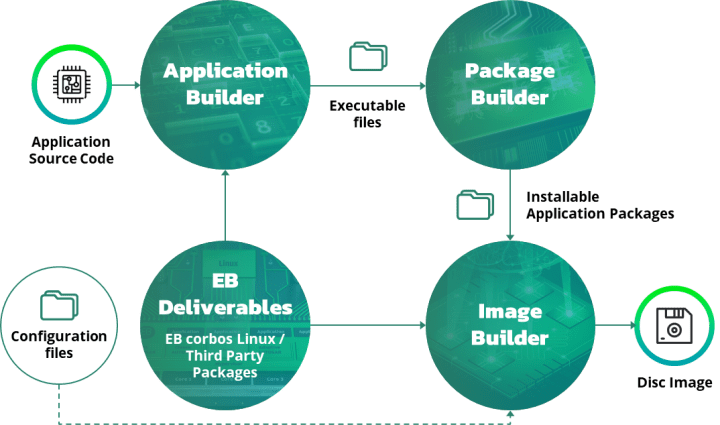
For customised image generation, based for example on EB corbos Linux – built on Ubuntu, a robust toolchain is essential. This involves managing image configuration through a comprehensive configuration management system. To ensure a seamless workflow from development to deployment, it is important to have a complete development solution that includes cloud-enabled and containerised tools. Additionally, leveraging Open Build Service (OBS) for build and delivery management adds an extra layer of efficiency. OBS ensures that the development and delivery process is smooth and well-organised, allowing for effective collaboration among team members. 

Environmental parity as a path towards SDVs

Elektrobit and Canonical’s strong common commitment to open-source is integral to both companies’ offerings. By actively engaging in the communities of these projects, Elektrobit and Canonical ensure a collaborative and evolving approach to software development. This approach benefits developers by providing them with immediate access to all essential components, allowing for a quick start to application development. This open-source foundation not only demonstrates Elektrobit’s and Canonical’s commitment to industry-standard practices but also empowers developers with accessible and versatile tools for streamlined application development and deployment.

The process of creating fully functional test environments that accurately replicate the constraints and behaviours of vehicle hardware involves a combination of different simulation techniques. These techniques are crucial in ensuring that the virtual hardware and software integration step moves from an initial prototype stage to a widely used production component. By implementing such simulation techniques, organisations can test and validate the performance of their vehicle systems implementation in a controlled and realistic environment before the actual implementation. Doing so minimises the risks and costs associated with physical testing and allows for more efficient development and optimisation of vehicle hardware and software. As a result, the use of simulation techniques in the automotive industry continues to evolve and to play a key role in improving the overall product quality and performance.

In the rapidly evolving landscape of automotive high-performance computing, EB corbos Linux – built on Ubuntu showcases the power of open-source innovation. This partnership between Elektrobit and Canonical not only demonstrates the potential for environmental parity, but also sets a new standard in the automotive industry. By leveraging these technologies, software development becomes more efficient, streamlined, and reliable. Thanks to EB corbos Linux – built on Ubuntu, we can imagine a future where innovation integrates with practicality, transforming the way we view automotive computing.

Contact Us

Further reading

Learn about EB corbos Linux – built on Ubuntu!

How to choose an OS for software development in automotive

Implementing FOTA updates for vehicles using a Dedicated Snap Store

Want to learn more about emerging automotive technologies? Read our whitepaper on 2024 trends.

Driving into 2024 – The automotive trends to look out for in the year ahead

With multiple technological innovations all converging at the same time, we are living in an exciting era for the automotive industry. From AI to 5G, and plenty in between, we can expect to see a host of groundbreaking trends emerge this year.

As electric vehicles (EVs) completely disrupt the market and the OEMs’ business strategies, the customer focus is shifting away from traditional internal combustion engine (ICE) vehicles, challenging the way that cars are being built and designed.

More importantly, with software updates and connectivity allowing for seamless services and entertainment, customers are expecting different approaches to the way they interact and experience their mobility. Let’s dive into some of the key automotive trends we’ll be seeing in 2024.

Over-the-air automotive software updates

Over-the-air (OTA) updates are at the forefront of the industry’s shift towards software. No longer confined to hardware constraints that required a visit to the dealership, vehicles can now be remotely updated with incremental and regular software patches.

OTA is one of the few advancements that is clearly a win-win for both the manufacturers and the users. For OEMs, OTA updates are cost-effective, reducing the need for vehicle recalls and physical interventions. When done efficiently, OTA processes can streamline the warranty approach with enhancements and bug fixes. Meanwhile, users can experience a seamless and convenient customer journey. As updates can be distributed easily, the vehicles and their systems remain secure with regular patches. Likewise, additional features can be deployed, from infotainment apps to advanced driver-assistance systems (ADAS) and autonomous driving features that can help improve safety.

The potential of OTA updates is undeniable, unfortunately, due to the high number of electronic control units (ECUs) in a vehicle, it remains a very challenging solution. However, Dedicated Snap Stores can help OEMs and Tier 1s streamline the whole update process. By simplifying the deployment of packages from the backend to the devices, Dedicated Snap Stores can help with updating highly-complex vehicle configurations. 

AI/ML is reshaping the driving experience

AI/ML is already everywhere in automotive, and it has the potential to completely transform the way we interact with our vehicles. As Large Language Models (LLMs) are being used daily by millions of users, integrating them in vehicle assistants can help the communication between the drivers and the vehicles. Thanks to natural language processing, we can expect very intuitive and responsive human machine interface (HMI) improvements in 2024.

With AD/ADAS systems relying on the analysis of large datasets to enable the navigation of vehicles in complex environments, AI/ML can be integrated to contribute to the decision-making processes, allowing for safer autonomous driving behaviours.

The Crucial Role of Environmental Parity

As the industry moves towards software-defined vehicles, environmental parity holds a critical role in enabling developers to obtain tested and validated software results in a realistic setting, and will probably be the most important automotive trend in 2024. Environmental parity refers to replicating the properties of physical hardware within a cloud environment to enable accurate testing. This concept becomes particularly crucial in the automotive industry, where even minor bugs can have serious safety-related consequences. By mimicking the target environment as closely as possible, developers can identify and address issues early in the development process.

2024 will surely be a year with a strong focus on cloud computing. Allowing developers to develop and validate first in the cloud, and try it on the streets later, this approach will accelerate development processes and increase the reliability of automotive software. It will also enhance the performance of simulation related analysis since the data obtained will be closer to real-life scenarios.

The connectivity backbone

At the heart of the software revolution lies the connectivity of vehicles and fleets. The rollout of 5G networks still ongoing in most countries promises faster data transfers and ultra-low latency, unlocking new use cases for vehicle and infrastructure communications.

Coupled with edge cloud technologies, 5G enables faster decisions, key for safe and reliable autonomous driving features. Faster speeds will also accelerate the deployment of entertainment, from augmented reality to immersive virtual reality displays. 

The rise of Electric Vehicles

EVs are probably the most impactful trend in automotive right now, and all OEMs are heavily investing to adapt their manufacturing process to the differences between EV and ICE production. Moreover, EV sales are closely tied to global sustainability commitments. Climate change concerns are growing, and the industry needs to invest in cleaner and greener solutions. EVs offer a compelling option to reduce carbon emissions, especially when powered by low emitting energy sources.

The domination of Tesla is challenged by Chinese OEMs, and 2024 will probably see interesting battery advancements. But this transformation is proving to be challenging for traditional OEMs that will have to invest quickly and adapt to this paradigm shift. As few are profitable with EVs, the rise of electric vehicles might lead to the fall of automotive giants. What is certain is that EVs are here to stay and will become a mainstream option for consumers.

Steering towards tomorrow

The shift towards software and EVs will transform the way we consider automotive and mobility in general. With the move towards software-defined vehicles, the enhancements our transportation and automotive solutions will benefit from are sure to be exciting.

In this blog, we’ve briefly highlighted the key automotive trends that will define the industry in 2024, but the path ahead is more complex and there are additional technologies that will impact the future of automotive. If you’re looking for an in-depth insight into these trends, and require strategic guidance for navigating through them, make sure to download our latest whitepaper.

As software advancement and customer expectations push automotive forward, they are also accelerating the evolution of regulations and sustainability targets, creating complex challenges. But as challenging as it may be, 2024 is also filled with opportunities to drive innovation – exciting times ahead.

Contact Us

Further reading

Want to learn more about emerging automotive technologies? Read our whitepaper on 2024 trends.

Learn about EB corbos Linux – built on Ubuntu

How to choose an OS for software development in automotive

Implementing FOTA updates for vehicles using a Dedicated Snap Store

❌