Pour regarder Netflix sur sa TV ou pour jouer, les box TV sont désormais des produits très efficaces qui viennent compléter les fonctions de votre téléviseur. Voici notre sélection de box TV compatibles Android, mais aussi Amazon et Apple.
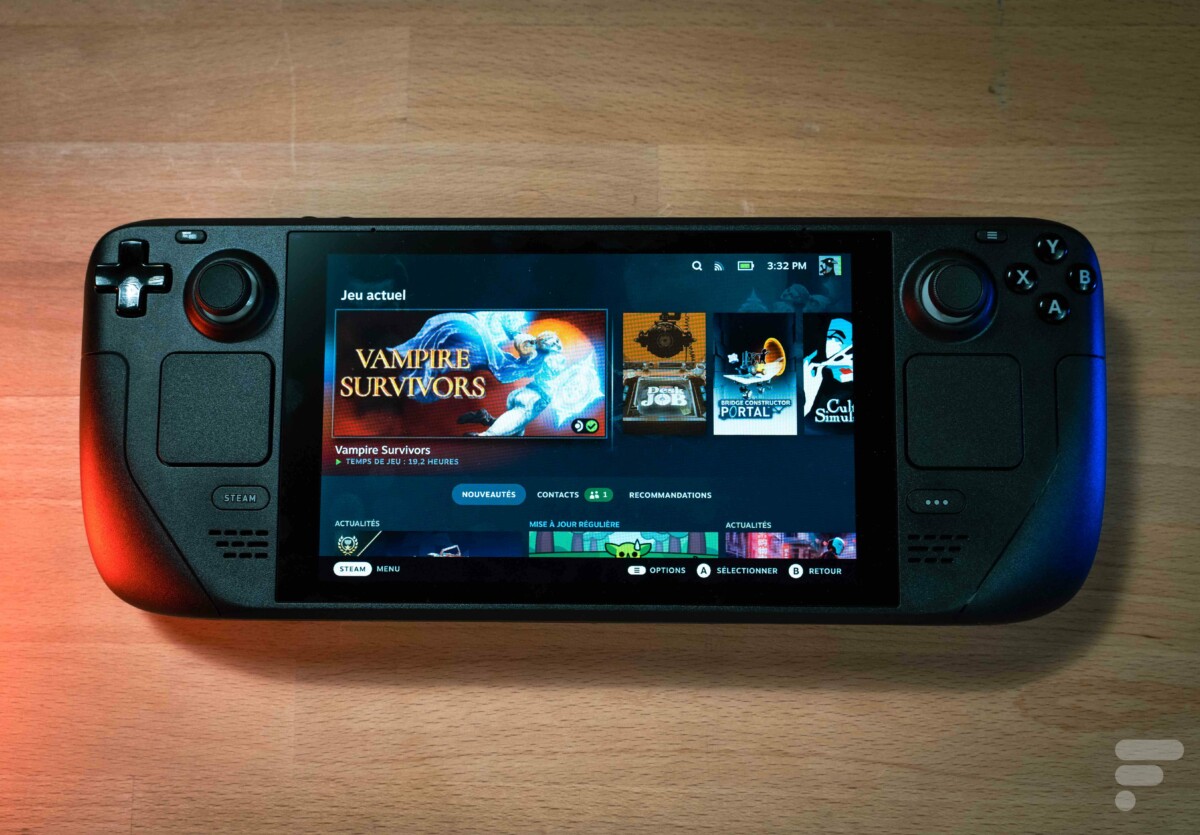
Ce mois-ci, Nvidia ajoute pas moins de 22 nouveaux jeux à son service de cloud gaming GeForce Now et annonce par la même occasion une compatibilité améliorée avec le Steam Deck.
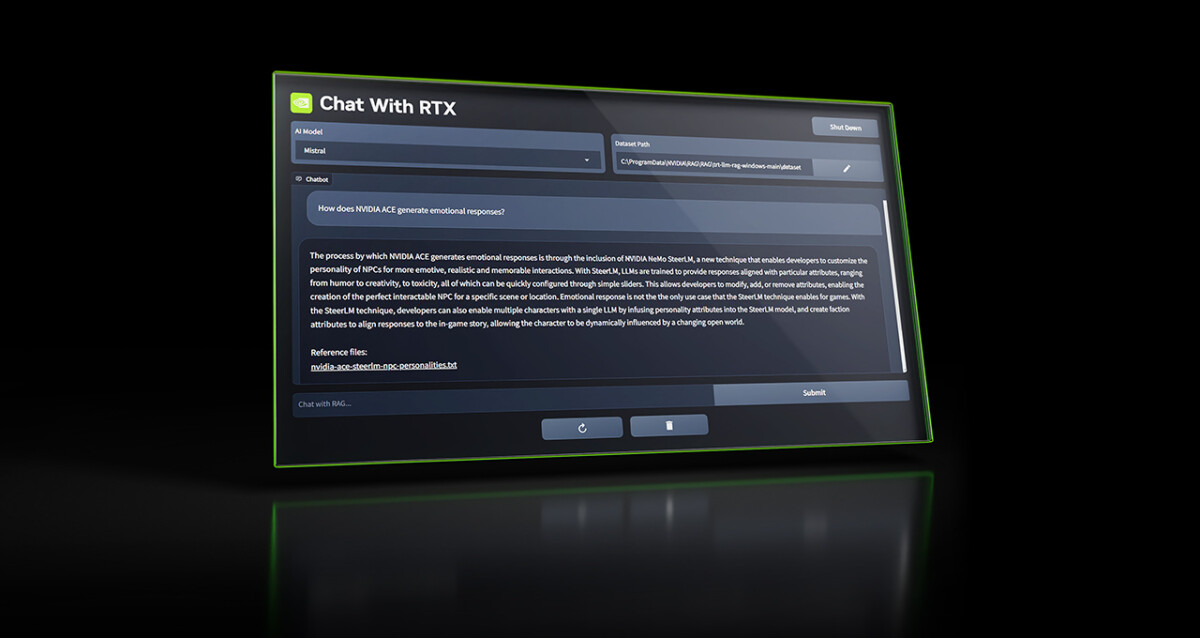
ChatRTX, le chatbot expérimental de Nvidia qui fonctionne en local, se complète avec l'arrivée des modèles Gemma de Google, versions ouvertes de Gemini. De quoi avoir des alternatives respectueuses de la vie privée à ChatGPT, Copilot, Gemini et autres, le tout sur un PC Windows.
La puissance de calculs des derniers processeurs et cartes graphiques vendues dans le commerce offre de nouvelles opportunités pour les cybercriminels. Les internautes doivent réfléchir à de nouveaux mots de passe face à la hausse de cette menace.
Cet article a été réalisé en collaboration avec NVIDIA
Monteurs et créateurs de contenus, cette seconde édition nationale du concours NVIDIA Studio STARS vous est dédiée ! Réalisez le trailer le plus épique possible et tentez de gagner l’un des PC ou GPU les plus performants du moment. Près de 6 000 euros de cadeaux, dont des produits RTX STUDIO sont mis en jeu !
Cet article a été réalisé en collaboration avec NVIDIA
Il s’agit d’un contenu créé par des rédacteurs indépendants au sein de l’entité Humanoid xp. L’équipe éditoriale de Numerama n’a pas participé à sa création. Nous nous engageons auprès de nos lecteurs pour que ces contenus soient intéressants, qualitatifs et correspondent à leurs intérêts.
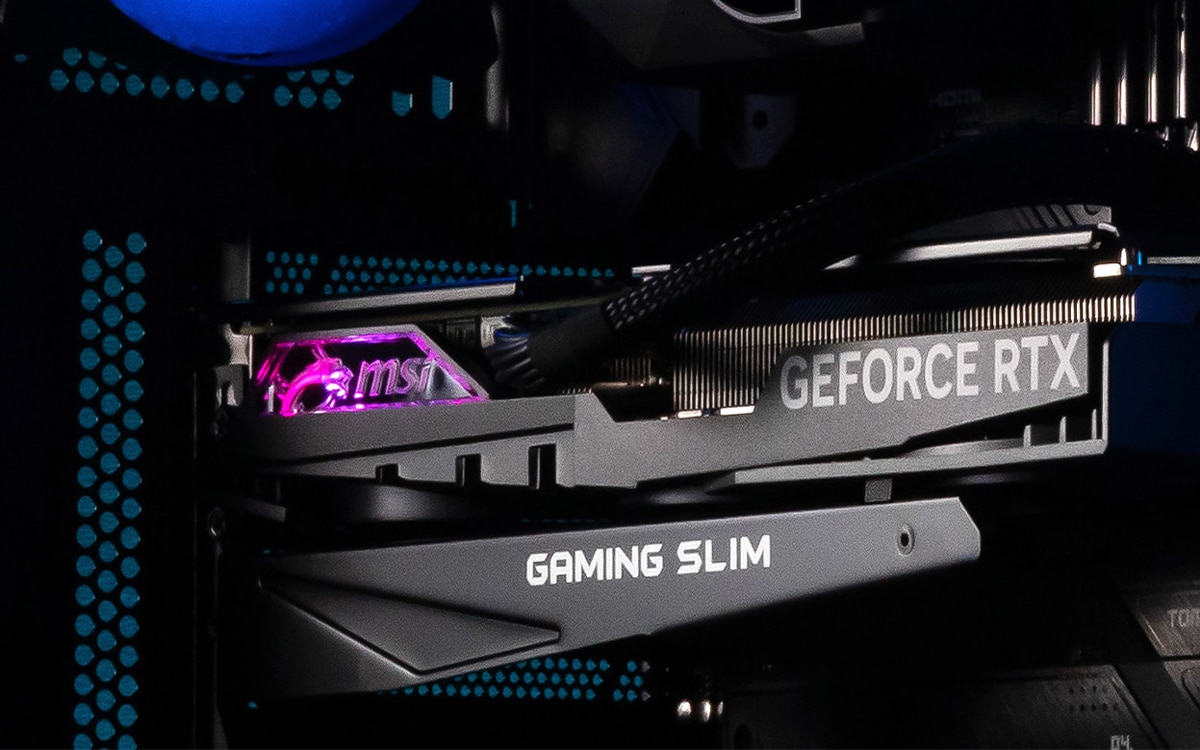
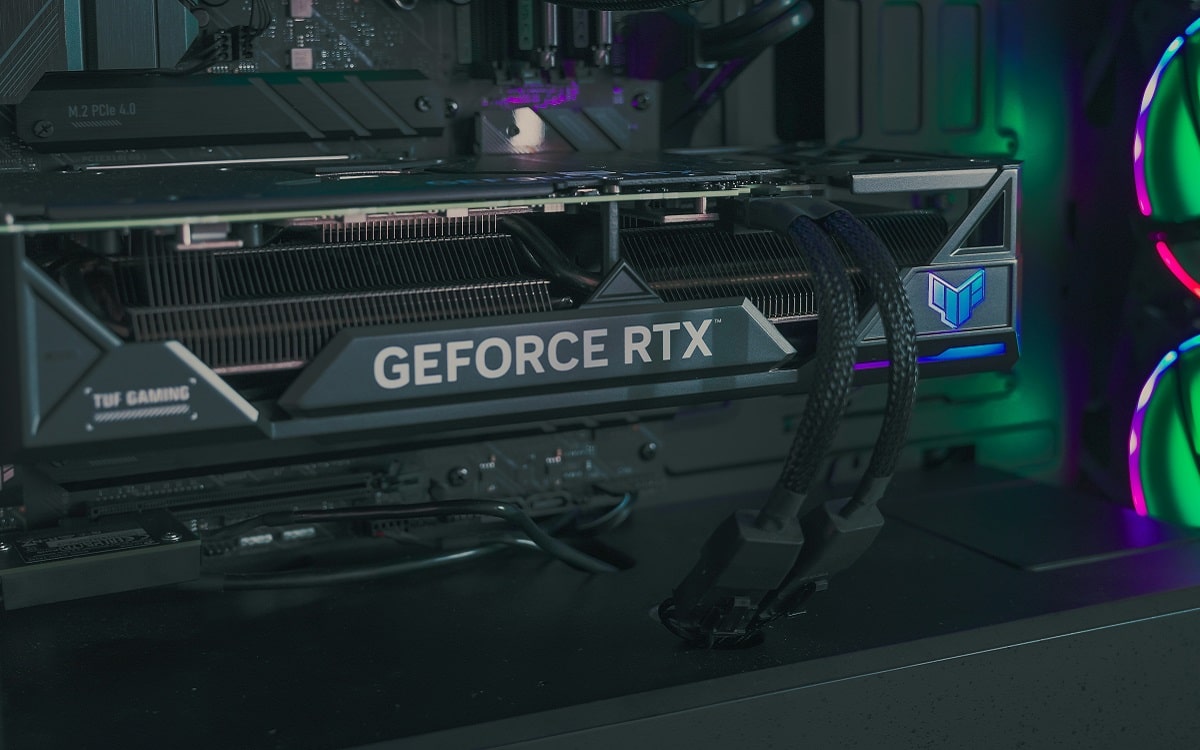
Les fabricants des cartes graphiques GeForce RTX se plaignent d'un manque d'approvisionnement des 4060 Ti, l'un des modèles d'entrée de gamme AD106. Cette mystérieuse diminution des stocks pourrait coïncider avec l'arrivée d'une future 4060 Ti SUPER.
Nvidia entend bien accentuer ses efforts sur l'intelligence artificielle, que ce soit pour ses cartes graphiques ou ses data centers à destination du monde professionnel. Pour cela, la marque au caméléon a récemment acquis Run:AI, une start-up basée en Israël et spécialisée dans la gestion de charges de travail IA.
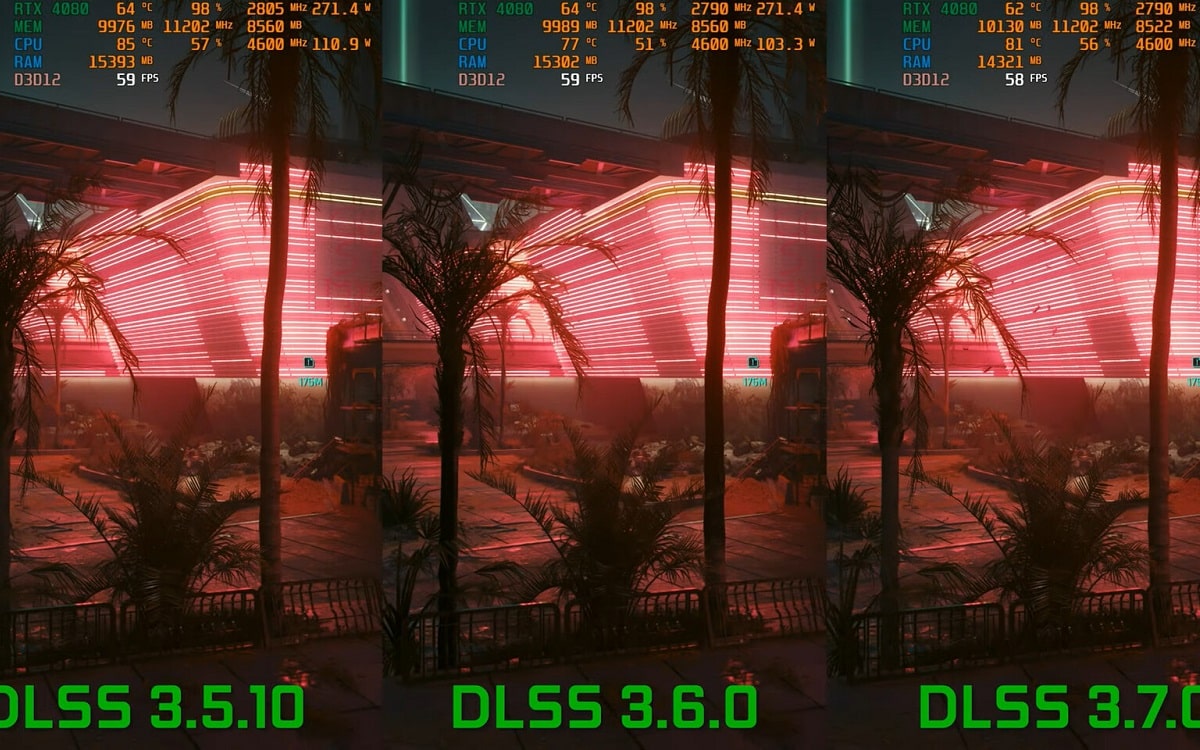
NVIDIA vient de mettre à jour sa technologie DLSS dans une version 3.7. Celle-ci apporte quelques améliorations de la technologie, grâce à un nouveau préréglage appelé "Eager Donkey". Celui-ci devrait apporter une meilleure netteté et réduire les problèmes de ghosting en jeu.
Les nouvelles cartes graphiques de la série Blackwell de NVIDIA se font attendre. Alors qu'elles devraient logiquement apporter une amélioration globale des performances, leur commercialisation pourrait avoir un impact négatif sur la génération des RTX Serie 40.
NVIDIA pourrait bientôt effectuer un rafraîchissement de ses cartes graphiques GeForce Série 40. Notamment les RTX 4060, 4060 Ti et 4070. Cependant, ces changements pourraient ne pas se traduire par une amélioration significative des performances.
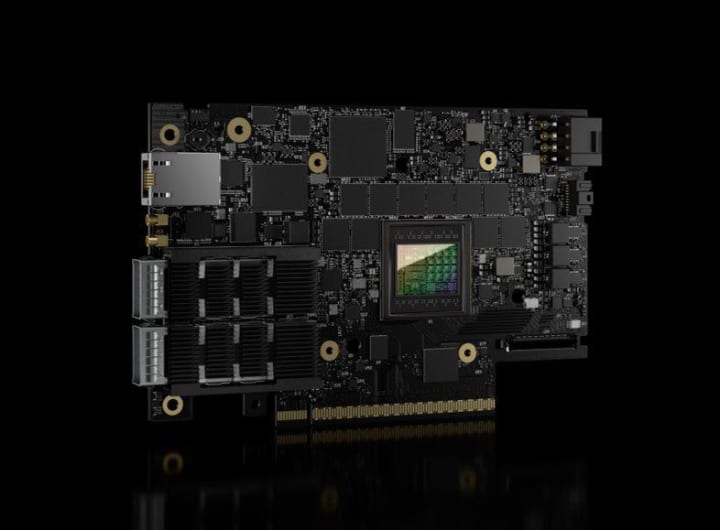
The NVIDIA BlueField-3 networking platform – powering the latest data processing units (DPUs) and SuperNICs, and transforming data centre performance and efficiency – runs BlueField OS, an optimised Linux operating system (OS) derived from Ubuntu. With Ubuntu’s signature maintenance and support guarantees, the comprehensive Ubuntu Pro software infrastructure stack, and bespoke optimisation, the collaboration between NVIDIA and Canonical accelerates time to value for NVIDIA BlueField-3 users and elevates security.
What are DPUs?
DPUs are a relatively new technology that represents the third pillar of accelerated data centre processing units, alongside CPUs and GPUs. By offloading and accelerating a wide variety of complex networking, security and storage workloads to the DPU, enterprises can reduce server power consumption by up to 30% while freeing up CPU capacity for computation tasks.
NVIDIA, now shipping the third generation of its industry-leading BlueField DPU, empowers enterprises to transform data centres with a 400Gb/s infrastructure compute platform that can handle the most demanding AI workloads.
NVIDIA BlueField OS is built on Ubuntu
DPUs require an operating system that is secure, stable and capable of supporting all of the innovative features that the new technology brings to the table – and that’s why NVIDIA BlueField-3 runs an optimised derivative of Ubuntu as its default OS.
Ubuntu, delivered by Canonical, supports a broad range of NVIDIA BlueField-3 features, ensuring that enterprise customers can readily consume the DPU functions with optimal performance. Canonical’s collaboration with NVIDIA delivers a solution that is easy to implement and offers full functionality out of the box.
Alongside time to value, Ubuntu reinforces the stability of NVIDIA BlueField-3. The optimised Ubuntu derivative powering the NVIDIA BlueField OS is based on Ubuntu Long Term Support (LTS) and goes through the same rigour of validation as an LTS release, which consequently delivers the same level of stability and performance. Ubuntu Pro embedded support is a core part of NVIDIA BlueField’s OS, thus enhancing the reliability of any NVIDIA BlueField-accelerated solution.
NVIDIA BlueField-3 Enterprise support and security backed by Canonical
Ubuntu’s extensive security features, hardening and compliance tooling, coupled with Canonical’s enterprise-grade support, have been instrumental in making Ubuntu the first-choice OS for organisations worldwide. NVIDIA customers can be assured that these same capabilities are also extended to NVIDIA BlueField-3 deployments.
One of the key factors that sets Ubuntu’s security apart from alternative operating systems is the pace at which Canonical delivers fixes for security common vulnerabilities and exposures (CVEs). Canonical has the fastest turnaround for CVE fixes in the industry, and this rapid patching applies to the NVIDIA BlueField OS. What’s more, these updates can be applied automatically, further minimising any windows of vulnerability.
Canonical is also signing the entire kernel image for the NVIDIA BlueField OS. This enables secure boot in enterprise deployments and guarantees that no modifications are made to the kernel, so that users can have complete trust in the OS.
Powering AI with Canonical infrastructure solutions and NVIDIA BlueField-3
NVIDIA BlueField-3 DPUs are increasingly becoming a central component in enterprise AI strategies. These use cases require a comprehensive ecosystem of software for optimal performance and efficiency. Canonical’s close collaboration with NVIDIA enables BlueField-3 users to take advantage of infrastructure solutions to address most enterprise AI data centre deployments and enable end-to-end management.
Customers can utilise metal-as-a-service (MAAS) for cloud-style provisioning of their physical infrastructure, turning bare-metal servers into an elastic, cloud-like resource that they can easily provision, monitor and manage. Meanwhile, Juju provides an orchestration engine for software operators that enables the deployment, integration, and lifecycle management of applications at any scale on infrastructure compute.
On the infrastructure software side, Canonical OpenStack provides an enterprise cloud platform, and Canonical Kubernetes drives seamless, highly automated container orchestration. These infrastructure services can fully utilise the offload capabilities supported in NVIDIA BlueField DPUs. In fact, Canonical also offers MicroK8s, a lightweight Kubernetes distribution that is tailor-made for low footprint deployments on DPUs. Similarly, MicroCloud is a miniature version of LXD, providing enterprises with everything they need to run virtualized workloads and system containers on their DPUs. All of these solutions are secured and supported for 10 years with an Ubuntu Pro subscription.
Ubuntu Pro and NVIDIA DOCA
The Ubuntu Pro stack works in tandem with NVIDIA DOCA, software at the heart of NVIDIA BlueField-3. NVIDIA DOCA is a unified software framework that provides a variety of APIs for improved NVIDIA BlueField-3 management, unlocking features around connectivity, monitoring, logging and more. Utilised alongside Ubuntu Pro, these features drive unprecedented infrastructure efficiency.
To learn more about deploying DPUs on Ubuntu, get in touch.
To learn more about NVIDIA BlueField-3, check out the datasheet.
Canonical expands its collaboration with NVIDIA through NVIDIA AI Workbench. NVIDIA AI Workbench is supported across workstations, data centres, and cloud deployments.
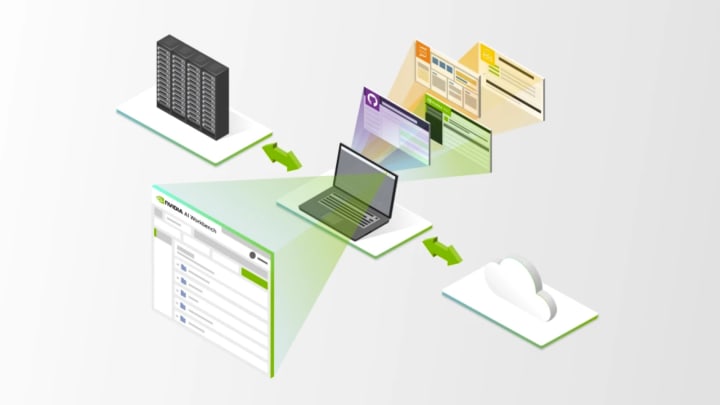
NVIDIA AI Workbench is an easy-to-use toolkit that allows developers to create, test, and customise AI and machine learning models on their PC or workstation and scale them to the data centre or public cloud. It simplifies interactive development workflows while automating technical tasks that halt beginners and derail experts. Collaborative AI and ML development is now possible on any platform – and for any skill level.
As the preferred OS for data science, artificial intelligence and machine learning, Ubuntu and Canonical play an integral role in AI Workbench capabilities.
On Windows, Ubuntu powers AI Workbench via WSL2.
In the cloud, Ubuntu 22.04 LTS enables AI Workbench cloud deployments as the only target OS supported for remote machines.
For AI application deployments from the datacenter to cloud to edge, Ubuntu-based containers are included as a key part of AI Workbench.
This seamless end user experience is made possible thanks to the partnership between Canonical and NVIDIA.
Define your AI journey, start local and scale globally
Create, collaborate, and reproduce generative AI and data science projects with ease. Develop and execute while NVIDIA AI Workbench handles the rest:
Streamlined setup: easy installation and configuration of containerized development environments for GPU-accelerated hardware.
Laptop to cloud: start locally on a RTX PC or workstation and scale out to data centre or cloud in just a few clicks.
Automated workflow management: simplified management of project resources, versioning, and dependency tracking.
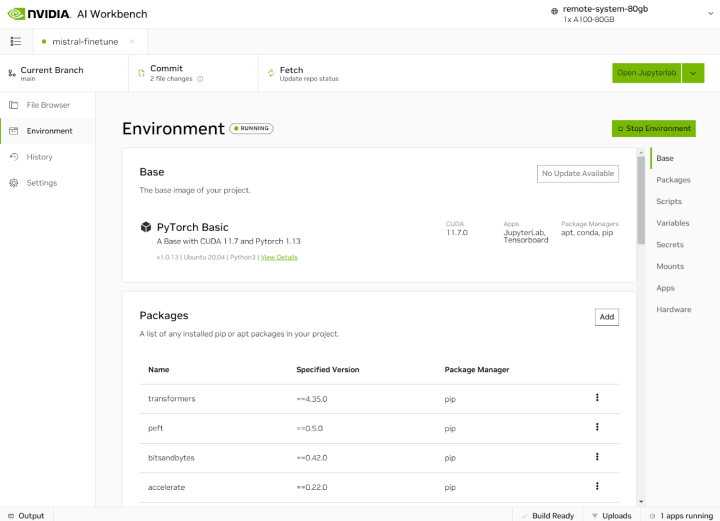
Fig 2. Environment Window in AI Workbench Desktop App
Ubuntu and NVIDIA AI Workbench improve the end user experience for Generative AI workloads on client machines
As the established OS for data science, Ubuntu is now commonly being used for AI/ML development and deployment purposes. This includes development, processing, and iterations of Generative AI (GenAI) workloads. GenAI on both smaller devices and GPUs is increasingly important with the growth of edge AI applications and devices. Applications such as smart cities require more edge devices such as cameras and sensors and thus require more data to be processed at the edge. To make it easier for end users to deploy workloads with more customisability, Ubuntu containers are often preferred due to their ease of use for bare metal deployments. NVIDIA AI Workbench offers Ubuntu container options that are well integrated and suited for GenAI use cases.
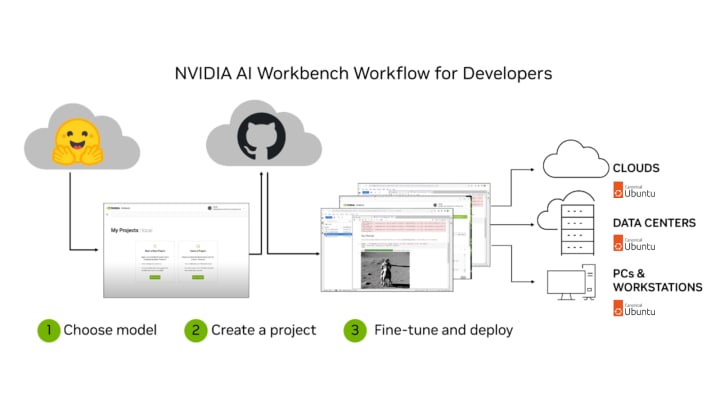
Fig 3. AI Workbench Development Workflow
Peace of mind with Ubuntu LTS
With Ubuntu, developers benefit from Canonical’s 20-year track record of Long Term Supported releases, delivering security updates and patching for 5 years. With Ubuntu Pro, organisations can extend that support and security maintenance commitment to 10 years to offload security and compliance from their team so you can focus on building great models. Together, Canonical and Ubuntu provide an optimised and secure environment for AI innovators wherever they are.
Charmed Kubernetes support comes to NVIDIA AI Enterprise
Canonical’s Charmed Kubernetes is now supported on NVIDIA AI Enterprise 5.0. Organisations using Kubernetes deployments on Ubuntu can look forward to a seamless licensing migration to the latest release of the NVIDIA AI Enterprise software platform providing developers the latest AI models and optimised runtimes.
NVIDIA AI Enterprise 5.0
NVIDIA AI Enterprise 5.0 is supported across workstations, data centres, and cloud deployments, new updates include:
NVIDIA NIM microservices is a set of cloud-native microservices developers can use as building blocks to support custom AI application development and speed production AI, and will be supported on Charmed Kubernetes.
NVIDIA API catalog: providing quick access for enterprise developers to experiment, prototype and test NVIDIA-optimised foundation models powered by NIM. When ready to deploy, enterprise developers can export the enterprise-ready API and run on a self-hosted system
Infrastructure management enhancements include support for vGPU heterogeneous profiles, Charmed Kubernetes, and new GPU platforms.
Charmed Kubernetes and NVIDIA AI Enterprise 5.0
Data scientists and developers leveraging NVIDIA frameworks and workflows on Ubuntu across the board now have a single platform to rapidly develop AI applications on the latest generation NVIDIA Tensor Core GPUs. For data scientists and AI/ML developers who would like to deploy their latest AI workloads using kubernetes, it is vital to leverage the most performance out of Tensor Core GPUs through NVIDIA drivers and integrations.
Fig. NVIDIA AI Enterprise 5.0
With Charmed Kubernetes from Canonical, several features are provided that are unique to this distribution including inclusion of NVIDIA operators and GPU optimisation features, composability and extensibility using customised integrations through Ubuntu operating system.
Best-In-Class Kubernetes from Canonical
Charmed Kubernetes can automatically detect GPU-enabled hardware and install required drivers from NVIDIA repositories. With the release of Charmed Kubernetes 1.29, the NVIDIA GPU Operator charm is available for specific GPU configuration and tuning. With support for GPU operators in Charmed K8s, organisations can rapidly and repeatedly deploy the same models utilising existing on-prem or cloud infrastructure to power AI workloads.
With the NVIDIA GPU operator, users can automatically detect the GPU on the system and install NVIDIA repositories. It also allows for the most optimal configurations through features such as NVIDIA Multi-Instance GPU (MIG) technology in order to leverage the most efficiency out of the Tensor Core GPUs. GPU-optimised instances for AI/ML applications reduce latency and allow for more data processing, freeing for larger-scale applications and more complex model deployment.
Paired with the GPU Operator, the Network Operator enables GPUDirect RDMA (GDR), a key technology that accelerates cloud-native AI workloads by orders of magnitude. GDR allows for optimised network performance, by enhancing data throughput and reducing latency. Another distinctive advantage is its seamless compatibility with NVIDIA’s ecosystem, ensuring a cohesive experience for users. Furthermore, its design, tailored for Kubernetes, ensures scalability and adaptability in various deployment scenarios. This all leads to more efficient networking operations, making it an invaluable tool for businesses aiming to harness the power of GPU-accelerated networking in their Kubernetes environments.
Speaking about these solutions, Marcin “Perk” Stożek, Kubernetes Product Manager at Canonical says: “Charmed Kubernetes validation with NVIDIA AI Enterprise is an important step towards an enterprise-grade, end-to-end solution for AI workloads. By integrating NVIDIA Operators with Charmed Kubernetes, we make sure that customers get what matters to them most: efficient infrastructure for their generative AI workloads.”
Getting started is easy (and free). You can rest assured that Canonical experts are available to help if required.
Get started with Canonical open source solutions with NVIDIA AI Enterprise
Try out NVIDIA AI Enterprise with Charmed Kubernetes with a free, 90-day evaluation
As a key technology partner with NVIDIA, Canonical is proud to showcase our joint solutions at NVIDIA GTC again. Join us in person at NVIDIA GTC on March 18-21, 2024 to explore what’s next in AI and accelerated computing. We will be at booth 1601 in the MLOps & LLMOps Pavilion, demonstrating how open source AI solutions can take your models to production, from edge to cloud.
As the world becomes more connected, there is a growing need to extend data processing beyond the data centre to edge devices in the field. As we all know, cloud computing provides numerous resources for AI adoption, processing, storage, and analysis, but it cannot support every use case. Deploying models to edge devices can expand the scope of AI devices by enabling you to process some of the data locally and achieve real-time insights without relying exclusively on the centralised data centre or cloud. This is especially relevant when AI applications would be impractical or impossible to deploy in a centralised cloud or enterprise data centre due to issues related to latency, bandwidth and privacy.
Therefore, a solution that enables scalability, reproducibility, and portability is the ideal choice for a production-grade project. Canonical delivers a comprehensive AI stack with the open source software which your organisation might need for your AI projects from cloud to edge, giving you:
The same experience on edge devices and on any cloud, whether private or public or hybrid
Low-ops, streamlined lifecycle management
A modular and open source suite for reusable deployments
To put our AI stack to the test, during NVIDIA GTC 2024, we will present how our Kubernetes-based AI infrastructure solutions can help create a blueprint for smart cities, leveraging best-in-class NVIDIA hardware capabilities. We will cover both training in the cloud and data centres, and showcase the solution deployed at the edge on Jetson Orin based devices. Please check out the details below and meet our expert on-site.
Artificial intelligence is no longer confined to data centres; it has expanded to operate at the edge. Some models require low latency, necessitating execution close to end-users. This is where edge computing, optimised for AI, becomes essential. In the most popular use cases for modern smart cities, many envision city-wide assistants deployed as “point-of-contact” devices that are available on bus stops, subways, etc. They interact with backend infrastructure to take care of changing conditions while users travel around the city. That creates a need to process local data gathered from infrastructure like internet-of-things gateways, smart cameras, or buses. Thanks to NVIDIA Jetson modules, these data can be processed locally for fast, low-latency AI-driven insights. Then, as device-local computational capabilities are limited, data processing should be offloaded to the edge or backend infrastructure. With the power of Tegra SoC, data can first be aggregated at the edge devices to be later sent to the cloud for further processing. Open-source deployment mechanisms enable such complex setups through automated management, Day 2 operations, and security. Canonical, working alongside NVIDIA, has developed an open-source software infrastructure that simplifies the deployment of multiple Kubernetes clusters at the edge with access to GPU. We’ll go over those mechanisms, and how they orchestrate the deployment of Kubernetes-based AI/machine learning infrastructure across the smart cities blueprint to profit from NVIDIA hardware capabilities, both on devices and cloud instances.
Presenter: Gustavo Sanchez, AI Solutions Architect, Canonical
Build and scale your AI projects with Canonical and NVIDIA
Starting a deep learning pilot within an enterprise has its set of challenges, but scaling projects to production-grade deployments brings a host of additional difficulties. These chiefly relate to the increased hardware, software, and operational requirements that come with larger and more complex initiatives.
Canonical and NVIDIA offer an integrated end-to-end solution – from a hardware optimised Ubuntu to application orchestration and MLOps. We enable organisations to develop, optimise and scale ML workloads.
Canonical will showcase 3 demos to walk you through our joint solutions with NVIDIA on AI/ML:
Accelerate smart city Edge AI deployments with open-source cloud-native infrastructure – Striving for an architecture to solve Edge AI challenges like software efficiency, security, monitoring and day 2 operations. Canonical, working alongside with NVIDIA, has developed an open-source software infrastructure that simplifies training on private and public clouds as well deployments and operations of AI models on clusters at the edge with access to NVIDIA GPU capabilities.
End-to-end MLOps with Hybrid Cloud capable Open-Source tooling – Cost optimization, data privacy, and HPC performance on GPUs are some of the reasons companies have to consider private cloud, hybrid cloud and multi cloud solutions for their Data and AI infrastructure. Open-source cloud agnostic infrastructure for Machine Learning Operations gives companies flexibility to expand beyond public cloud vendor lock-ins, alignment with restricted data compliance constraints and capabilities to take full advantage of their hardware resources, while automating day to day operations.
LLM and RAG open-source infrastructure – This demo shows an implementation of an end-to-end solution from data collection and cleaning to training and inference usage of an open-source large language model integrated using the retrieval augmented generation technique on an open-source vector database. It shows how to scrape information out of your publicly available company website to be embedded into the vector database and to be consumed by the LLM model.
Visit our Canonical booth 1601 at GTC to check them out.
Come and meet us at NVIDIA GTC 2024
If you are interested in building or scaling your AI projects with open source solutions, we are here to help you. Visit ubuntu.com/nvidia to explore our joint data centre offerings.

 Connexion