Vue lecture

Il y a de nouveaux articles disponibles, cliquez pour rafraîchir la page.

Pourquoi les plateformes de SVoD ne proposent pas le même catalogue selon le pays ? [Sponso]

Avez-vous déjà remarqué lors de vos séjours à l'étranger que les plateformes de streaming ne proposent pas les mêmes contenus qu'en France ? S'il s'agit d'abord d'une question de contrat avec les ayants droit, il existe une façon de contourner cette restriction et de la tourner à son avantage.

 [Lire la suite]

Chaque matin, WhatsApp s’anime avec les dernières nouvelles tech. Rejoignez notre canal Frandroid pour ne rien manquer !

Nouvelle pépite des French Days : forfait mobile 100 Go à 7,99 €/mois seulement

Marre de payer une blinde pour son forfait mobile ? Même les opérateurs télécom et les MVNO se mettent aux French Days et proposent des petits prix pour des forfaits à grosse enveloppe de data. C'est notamment le cas de Cdiscount Mobile qui enchaîne les offres et propose cette fois-ci une série limitée à 100 Go pour seulement 7,99 €/mois !

 [Lire la suite]

Chaque matin, WhatsApp s’anime avec les dernières nouvelles tech. Rejoignez notre canal Frandroid pour ne rien manquer !

Free revoit son forfait à 2€ : une augmentation qui fait grincer des dents

Le forfait Free 2€ avec l'option Booster 5 Go, c'était l'offre idéale pour les petits budgets. Mais ça, c'était avant que l'opérateur ne décide d'augmenter le prix de son option « Booster ».

 [Lire la suite]

Retrouvez un résumé du meilleur de l’actu tech tous les matins sur WhatsApp, c’est notre nouveau canal de discussion Frandroid que vous pouvez rejoindre dès maintenant !

IPTV, streaming… comment l’Arcom bloque ces pratiques illégales

Le streaming illégal et l'IPTV ont le vent en poupe, mais l'Arcom veille au grain. En 2023, ce sont pas moins de 1544 noms de domaines qui ont été bloqués par les opérateurs français. Toutefois, tout ne peut pas être bloqué.

 [Lire la suite]

Envie de rejoindre une communauté de passionnés ? Notre Discord vous accueille, c’est un lieu d’entraide et de passion autour de la tech.

Spotify gratuit : encore une fonctionnalité en moins, que reste-t-il ?

Logo Spotify

La version gratuite de Spotify voit une fonctionnalité disparaître sur l'application : les paroles des morceaux. Encore une fonctionnalité en moins dans un modèle sans abonnement de moins en moins intéressant, alors que les tarifs de Spotify augmentent.

 [Lire la suite]

Le saviez-vous ? Google News vous permet de choisir vos médias. Ne passez pas à côté de Frandroid et Numerama.

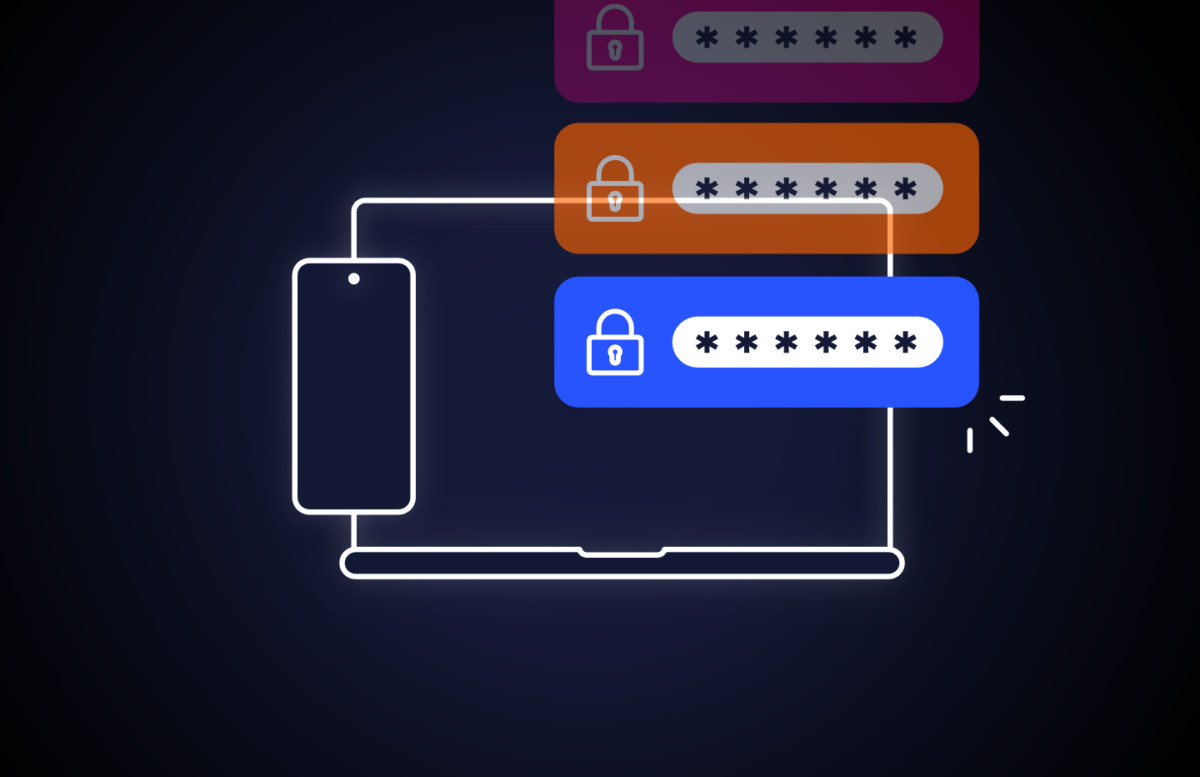
Quels sont les meilleurs gestionnaires de mots de passe gratuits et payants ?

Il existe d'excellents gestionnaires de mots de passe permettant de conserver, à un seul et même endroit, la totalité de vos mots de passe utilisés sur Internet pour ne plus avoir à les mémoriser. Voici notre sélection des meilleures applications gratuites ou payantes.

 [Lire la suite]

Utilisez-vous Google News (Actualités en France) ? Vous pouvez suivre vos médias favoris. Suivez Frandroid sur Google News (et Numerama).

AD FS : configurer un client OpenID

Présentation Dans ce tutoriel, je vais vous expliquer comment configurer un client OpenID avec AD FS et retourner des revendications (claims) à l’application cliente. Pour ce tutoriel, j’ai utilisé un client générique de test, qui permet de voir les informations retourner par le fournisseur d’identité qui sera dans ce tutoriel AD FS. Le client est ...

Lire plus

Managed Cloud Services: when outsourcing your operations is the most cost-effective choice

Clouds, be they private or public, surprisingly remain one of the most DIY-favouring markets. Perhaps due to the nebulous and increasingly powerful technologies, a series of myths, or even unnecessary egos, the majority of non-tech-centric enterprises (meaning, companies whose primary business scope rests outside the realm of IT software and hardware) still try to build and nurture in-house cloud management teams, without considering outsourcing even part of their workload. Self-management has its advantages, however, thinking it’s the only option is a mistake. Reading this you may think: “managed cloud services are for lazy people, I can do it myself.” And the truth is, you indeed can. But should you? 

Cloud operations 

Let’s be honest: building a cloud is no easy feat. It is not for beginners, and involves a large series of considerations: is it large enough? Secure enough? Efficient enough? Does it justify the cost? So having made your way through this maze of questions and having finally concluded that you want to move towards a cloud deployment, the last thing you need is another set of considerations for operating it. 

Operations can be a vague term. In the tech/cloud field, it defines the entire range of actions and activities required to keep any cloud infrastructure running consistently, reliably, and efficiently. Briefly, good operations make sure your cloud does what it’s supposed to do most of the time and does not significantly disrupt your business processes when errors happen. While different from cloud to cloud, most operations can be classified into three categories: 

  • Monitoring – constant measurements of key metrics against a predefined schema to ensure functionality
  • Management – tweaks and changes to the infrastructure, such as upgrades, patches, and scaling, to ensure reliability
  • Troubleshooting – a system of protocols and procedures that keeps your workloads safe and ensures minimum data loss when incidents happen

This may sound complicated and complex, and in many ways it is. As an industry rule of thumb, for every 100 nodes of any cloud’s deployment, you will require at least one expert to ensure that proper operations are in place. This is very important because improper operations can cause significant disruption to your entire business, from inaccurate data and processes to major errors in processes and performance. Briefly put, cloud operations cannot be neglected.

The cost of self-managed clouds 

Regardless of how big or small or simple or complex your infrastructure is, there is a range of costs that you are likely to incur when it comes to operating your cloud. These can be: 

  • Direct – These are costs directly associated with the deployment and operation of your cloud, such as hardware purchases and maintenance, software licences, service subscriptions and more. They are relatively predictable and will allow you to budget quite easily ahead of time, but do allow a margin of +/- 10% when estimating, as the integration of components within the wider infrastructure can sometimes incur additional service costs. 
  • Indirect – When it comes to indirect costs, the definition’s boundaries become more blurry. In general, an indirect cost is any cost that, when neglected or denied, significantly reduces the reliability, efficiency, or even mere availability of your cloud. For example, IT headcount is a significant indirect cost: it will cost you money to hire, train, retain, and grow a team of experts to manage your infrastructure, and these costs will only be augmented by the ongoing skill gap the market is currently experiencing. The opportunity costs of having people work on operations rather than innovation can range from negligible to severe, as time-to-market is an essential component for maintaining a competitive edge in any industry. 

Indirect costs are highly unpredictable and involve a significant level of corporate responsibility should you choose to do everything yourself. Suppose you’ve hired your team and trained them: at any point, engineers can leave, or require additional training; sometimes their talent will be needed to sustain other technical feats within your business; and sometimes things can simply go slower than expected. It’s not impossible to navigate these indirect costs. Just note that while this has some advantages – like full independence and more freedom to allocate resources – it has increased risks of financial losses and slower time to market.”

In light of these costs, a general observation (or unwritten market consensus) is that tech-centric companies will likely be able to self-manage their clouds successfully. Non-tech-centric companies are likely to encounter a point where managed cloud services would present a more feasible and competitive opportunity. 

When to opt for managed cloud services: 

Before discussing when to opt for managed cloud services, let’s take a moment to clarify what they entail. Opting for Managed Cloud Services involves outsourcing your cloud infrastructure operations to an external expert, also known as a Managed Service Provider (MSP). You’ll ideally be able to relinquish all your operational concerns (along with responsibility for the efficiency of your operations) to the MSP, and focus on innovation or whatever else really matters for you. 

There is a pervasive myth that managed cloud services are only a useful option when your company finds itself unable to manage anything by itself, or when you simply don’t have an IT team. Nothing could be further from the truth. There are several situations where choosing a managed cloud service provider can prove both helpful and lucrative: 

Vertical growth – When you want to expand into a new territory, it is unlikely that you will have access to a well-established senior expertise within your IT team. This in turn can be expensive to acquire, and will need plenty of time to adjust to your company’s values and processes. Choosing an MSP to support you and enable you to grow vertically as soon as you want can help you accelerate your time to market and cut talent acquisition costs. 

Re-focus – You probably already have an IT team, and you are probably very happy with it. But when it comes to their bandwidth, you may want to have them focus on sustaining technological innovation for your competitive advantage, rather than spending most of their time keeping the lights on in your cloud infrastructure. A managed cloud service will help offer your team enough headspace to concentrate on your primary business scope. 

Cost predictability – Faced with a new project, it would be wise and appropriate to estimate your costs. But cloud infrastructure, as mentioned above, can incur a lot of unexpected costs, especially when it comes to covering a skill gap and mitigating for lost opportunities. A managed service provider should offer a stable and predictable price (usually per node per year), which can give you full control over your budgets and allow you to allocate resources more efficiently. 

You can find more information on general managed IT services on our managed services webpage.

Conclusion

When venturing into unfamiliar territory, opting for managed services is advisable – especially for non-tech-centric enterprises. Cloud infrastructure operations is a perfect example of such a case: a highly complex and resource-intensive set of processes that is essential to your business success, but detrimental to your costs if improperly self-managed. For any non-tech-centric enterprise looking to enter, expand, or upgrade their open-source cloud infrastructure, Managed Cloud Services are an attractive opportunity that proposes countless advantages and can help you retain (or even augment) your competitive edge. 

Canonical offers a wide range of managed cloud services, and we invite you to explore them by visiting our website and getting in touch

Charmed MongoDB®: use cases for financial services

Financial institutions handle vast amounts of sensitive and confidential data, including customer information, transaction details, and regulatory compliance records. A trusted database ensures the security and privacy of this sensitive information, protecting it from unauthorised access, breaches, or cyber threats.

MongoDB is the ideal fit, and it’s one of the most widely used databases in the financial services industry. It  provides a sturdy, adaptable and trustworthy foundation. It also can safeguard sensitive customer data while facilitating swift responses to rapidly evolving situations. This security and stability can be enhanced even further with Charmed MongoDB.

MongoDB use cases

Customer Data Management

Within financial services, MongoDB is often used as the database for customer data management. MongoDB can store and manage customer profiles, account information and transaction histories. Its flexibility allows for handling diverse data types related to customer records, and it can easily accommodate changes in customer data structures as regulations and business requirements evolve. Its document-oriented model allows for flexible and dynamic schemas, adapting to diverse customer information.

Online Banking

Another area where MongoDB offers a robust database platform is online banking – which covers any web or mobile banking apps. These applications often need to store and retrieve customer account information, transaction history, and payment data as fast as possible. MongoDB can provide the back-end data storage for these applications, supporting fast and secure access. Its scalability ensures a seamless user experience, and its flexible data model accommodates the evolving requirements of digital banking platforms.

Fraud detection

The financial sector is particularly susceptible to fraudulent activities due to factors that make it an attractive target for malicious actors. Some key reasons include high-stake transactions, insider threats, data breaches, and more. Organisations in this sector rely on fraud detection systems, which in turn require a suitable database. MongoDB can store transaction data, user behaviour patterns, and other information that is essential for fraud detection. In addition, it can handle high volumes of data and perform real-time analytics – enabling rapid detection of fraudulent activities even for businesses operating on a massive scale.

Explore how MongoDB can support your projects in financial, telecommunications and automotive industries in our recent guide: MongoDB® for enterprise data management

Canonical services for the financial sector

Canonical offers comprehensive financial services (FinServ) open source solutions and expertise. From hybrid multi-cloud strategy to Kubernetes, we can help you accelerate innovation, drive business agility and reduce costs. Contact us for your MongoDB and database needs

Canonical for your MongoDB journey

With Charmed MongoDB – an enhanced, open source and fully-compatible, drop-in replacement for the MongoDB Community Edition with advanced enterprise features – Canonical can support you at every stage of your MongoDB journey (from Day 0 to Day 2). Our services include:

Design

  • Proof of Concept (PoC) – We work with you to build a PoC before you invest in infrastructure for advanced use cases. This allows you to assess your return on investment carefully.
  • Data solutions training – Train your team to use our data solutions, from understanding all features to customisation options, deployment and admin tasks.

Deployment

  • Data and/or infrastructure migration – Migration from one infrastructure or database to the new Canonical Charmed MongoDB solution. 
  • MongoDB deployment – Deploy, set up, configure Charmed MongoDB in your production environment using the Charmed MongoDB Machine or Kubernetes operator.

Maintenance, management and support

  • 24x7x365 Support and industry-leading SLAs – Get hands-on monitoring and support for your MongoDB application, with guaranteed SLA.

Management of MongoDB in the production environment – Self manage or outsource the life-cycle management of your mission-critical database application to Canonical’s experts.

Further reading

MongoDB® Toolkit: A guide to MongoDB security and support

Charmed MongoDB: the operator you need for managing your document database

Running MongoDB on Kubernetes

Trademark Notice

“MongoDB” is a trademark or registered trademark of MongoDB Inc. Other trademarks are property of their respective owners. Charmed MongoDB is not sponsored, endorsed, or affiliated with MongoDB, Inc.

❌